
December 08, 2025
Working-Level Staff from 10 Cities Visit Tokyo: Insights into Urban Greening and Green Infrastructure
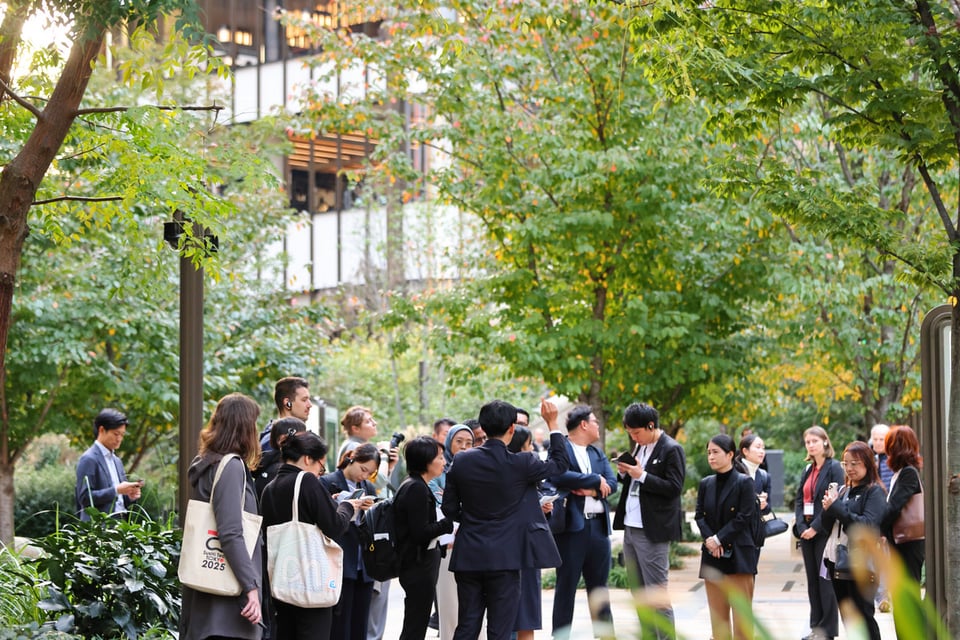
Azabudai Hills
As part of a G-NETS joint project, a two-day site visit on urban greening was held from November 6 to 7, 2025, hosted by the Tokyo Metropolitan Government (TMG). Working-level staff from 10 cities took part in the visit, which featured site tours of Ohashi Sato no Mori and Azabudai Hills on the first day, followed by Meiji Park and Umi-no-Mori Park on the second day. The program concluded with an exchange of views at TMG.
Key Site Visits
[November 6, 2025]
・Tokyo Metropolitan Government (TMG)
At TMG, participants received an overview of Tokyo Green Biz, a comprehensive urban greening initiative launched in 2023 that aims to build a sustainable city in harmony with the natural environment, looking ahead to the next 100 years. TMG officials introduced measures such as thinning and maintenance of forests, which cover approximately 40% of Tokyo’s total area; the public release of the Tokyo Green Biz Map, a website mapping green spaces across the city; and collaborative projects with the private sector to develop rooftop gardens and parks. The presentation also covered green infrastructure, which utilizes natural systems to address natural disasters such as heavy rainfall and extreme heat.
Officials from the Bureau of Environment further explained the EDO-MIDORI Registered Green Spaces established in 2017. This program registers and publicly declares green areas on privately owned properties exceeding 1,000 m2 that actively plant native species and contribute to biodiversity conservation. Among these, sites that demonstrate particularly strong consideration for habitats and living environments are certified as Excellent Green Spaces, helping enhance the quality of greenery across Tokyo while promoting greater public awareness. As of September 2025, seventeen sites—including Ohashi Sato no Mori (Ohashi Ventilation Station), one of the day’s destinations—have been registered under the program.
・Ohashi Sato no Mori
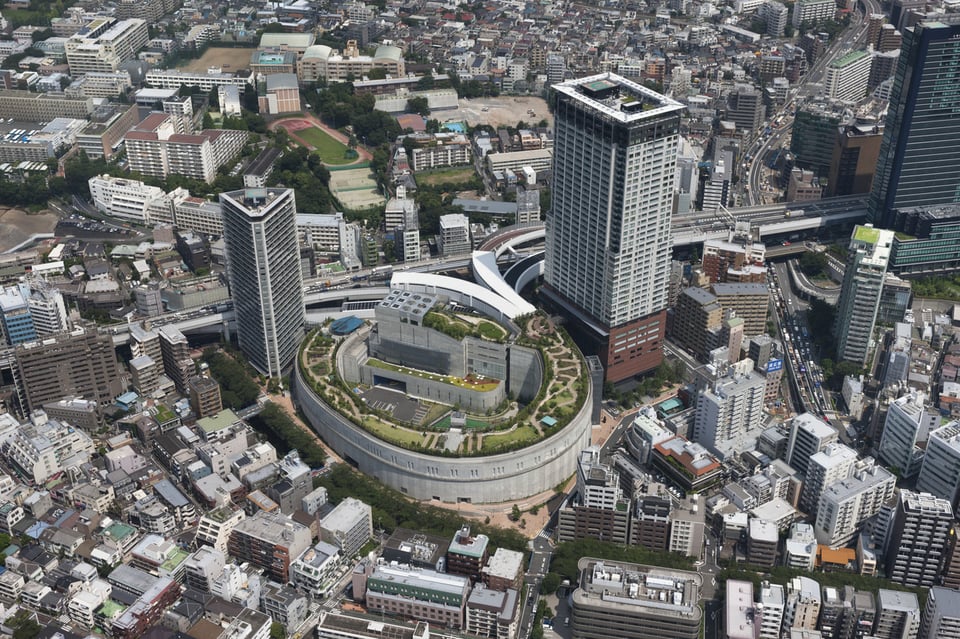
Ohashi Sato no Mori, located on the rooftop of the Ohashi Ventilation Station. (Courtesy of Metropolitan Expressway Co., Ltd.)
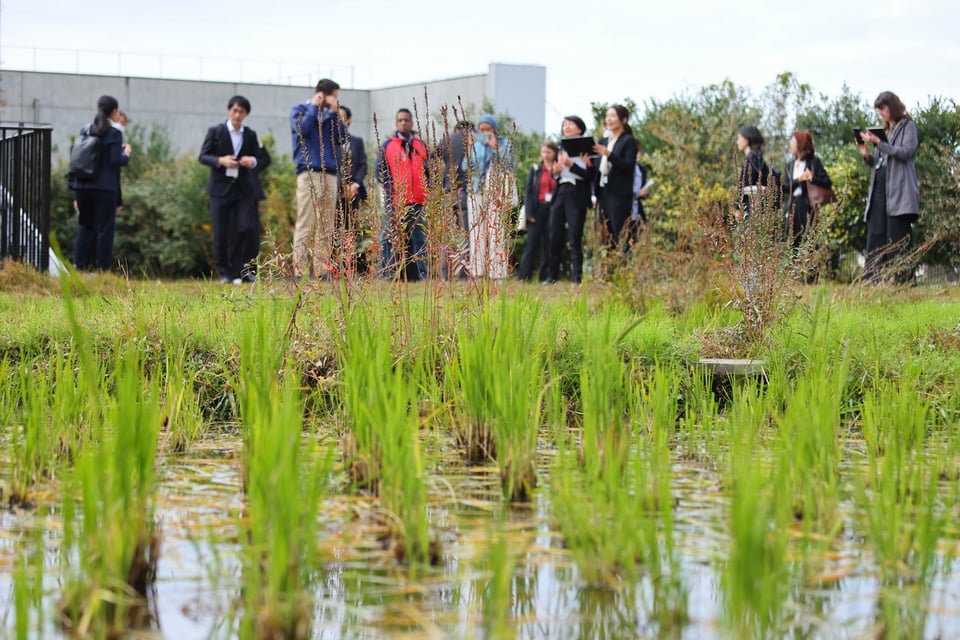
Rice field within Ohashi Sato no Mori, modeled after the original landscape around the Meguro River.
The “winter-flooded rice paddy” method contributes to biodiversity restoration by retaining water throughout the winter.
Located on the rooftop of the Ohashi Ventilation Station at the junction of the Metropolitan Expressway Route 3 (Shibuya Line) and Central Circular Route, Ohashi Sato no Mori is an approximately 900-m2 rooftop biotope created by the Metropolitan Expressway Co., Ltd., in 2011. The site is used for community events, children’s rice-planting experiences, and environmental education programs.
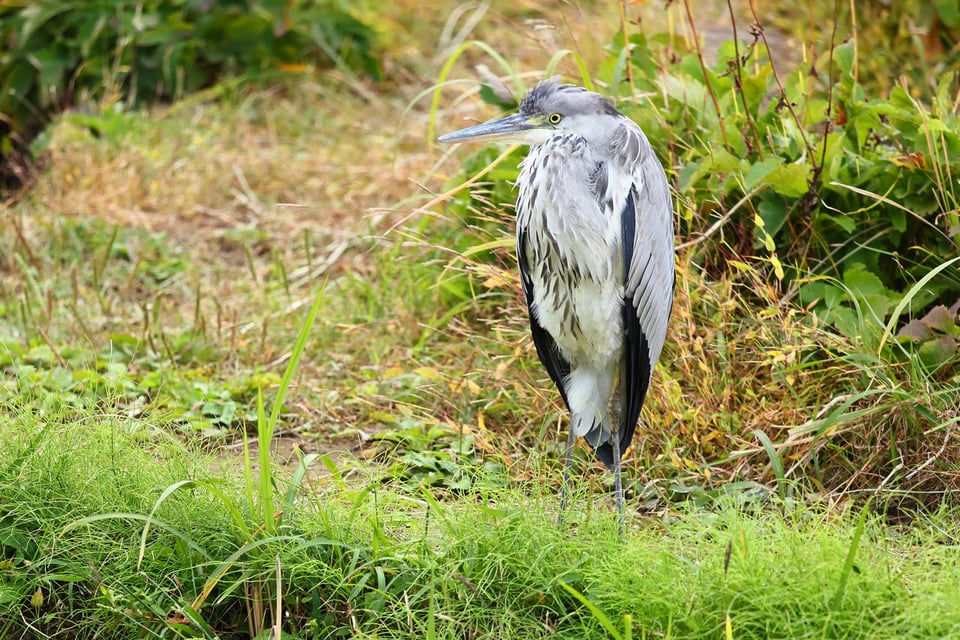
Designed to recreate the natural landscape of the Meguro River area in the early Shōwa period, it features a rice paddy and a stream that circulates rainwater. Around 460 species of plants and animals have been recorded, and during the visit participants observed not only reintroduced aquatic species but also butterflies, bees, and grey herons.
・Azabudai Hills
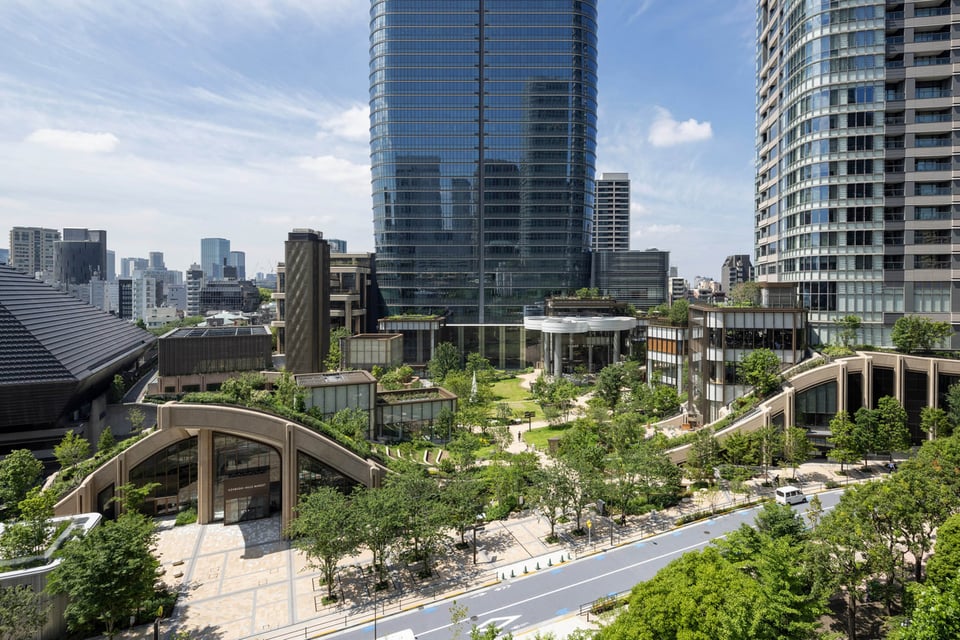
Azabudai Hills, opened in 2023 in Minato City. (Courtesy of Mori Building Co., Ltd.)
Azabudai Hills, which hosted a Tokyo Green Biz event in partnership with TMG in October 2025, is a large-scale mixed-use complex featuring offices, residences, a hotel, commercial facilities, cultural facilities, a school, and medical institutions. Developed through a redevelopment project spanning more than 35 years, the project makes use of the area’s natural elevation differences and secured green space by placing high-rise towers strategically, achieving approximately 24,000 m2 of greenery across the site. Home to around 320 plant species, the development contributes to the conservation of urban ecosystems and creates opportunities for visitors to engage with nature through various events and workshops. During the site visit, participants toured the Central Green as well as the rooftop farm and orchard on the low-rise rooftop, walking through approximately 6,000 m2 of green space (including the Central Green).
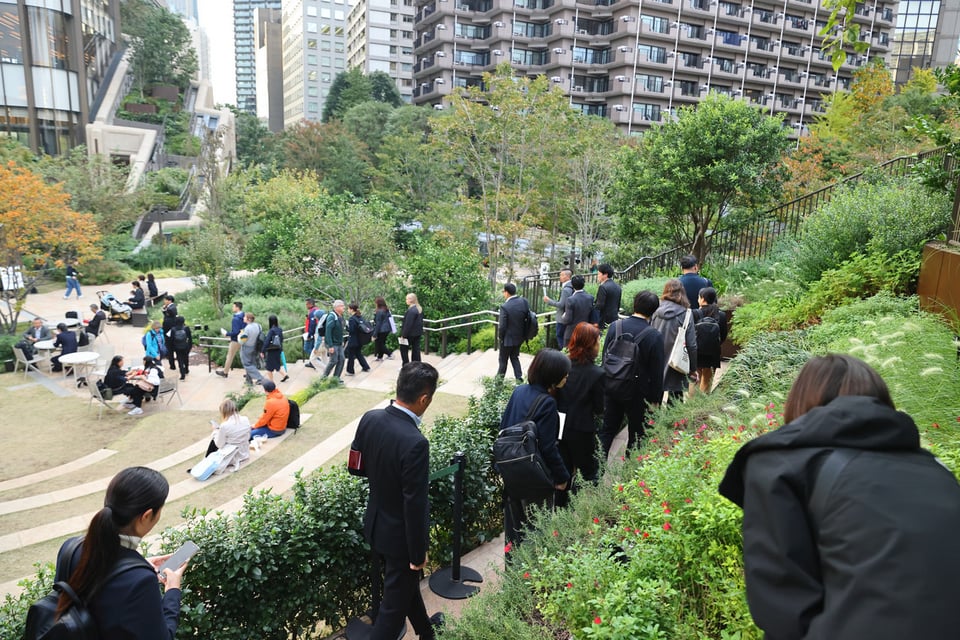
The 6,000-m2 Central Green and low-rise rooftop orchard.
[November 7, 2025]
・Meiji Park
As part of the second day of the site visit, the group visited Meiji Park, which opened in 2023 as the first Tokyo park developed under the Park-PFI (Park–Private Finance Initiative) scheme. In cooperation with Tokyo Legacy Parks, the approximately 16,000 m2 of park space includes cafés, planting areas, a lawn plaza, a Rain Garden, and an inclusive playground that can be used by anyone regardless of age or physical ability.
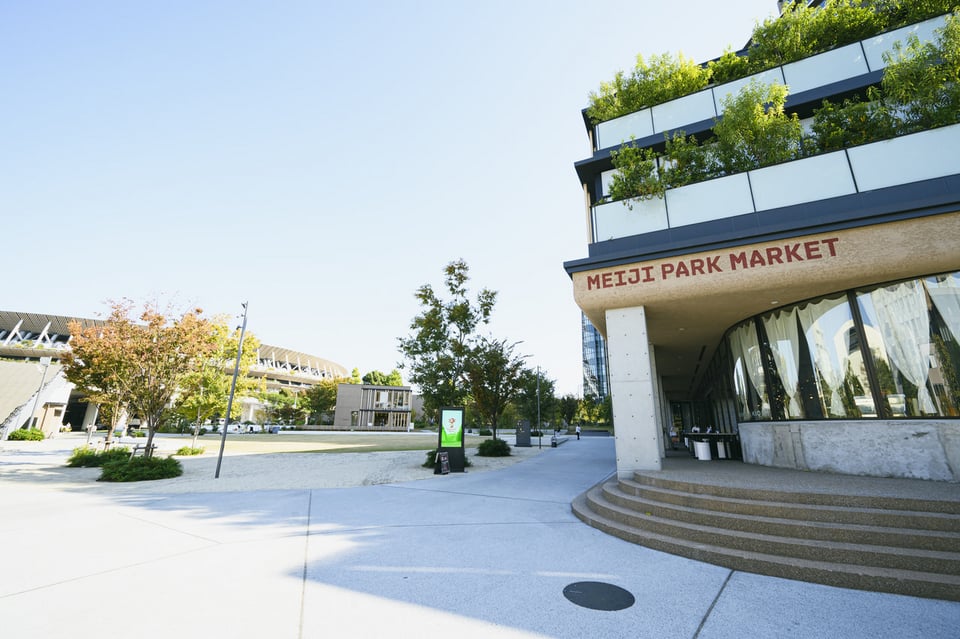
Adjacent to the National Stadium, the park contains five buildings that house cafés, an outdoor activity shop, and more.
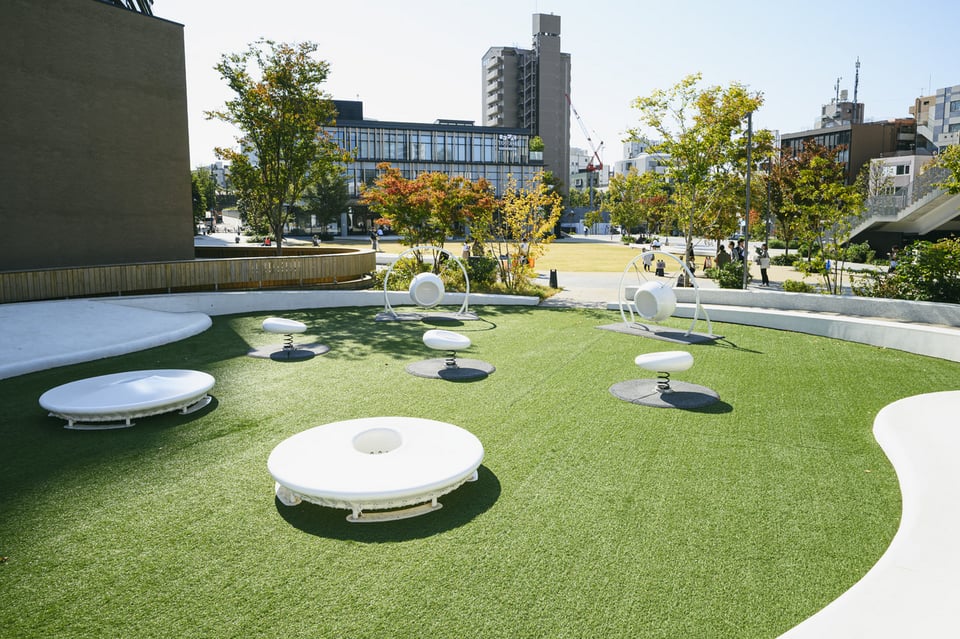
Play equipment in the Inclusive Square can be moved to allow use of the space for events.
In the Forest of Pride area, designed around the concept of a “forest that will last for 100 years,” approximately 650 trees have been planted across a site of 7,500 m2, including a wide variety of native species. Participants expressed surprise at the scale of the planting. The park also plays a role as green infrastructure for mitigating the heat island effect and addressing urban heavy rainfall.
・Umi-no-Mori Park
The group then visited Umi-no-Mori Park. Located on the Central Breakwater Inner Landfill Site, where waste was landfilled until 1987, the park spans approximately 600,000 m2. Through collaboration between TMG, citizens, organizations, and companies, around 240,000 trees—such as evergreen species resilient to sea breezes—were planted, and following subsequent development work, the park opened in March 2025. It now hosts environmental workshops, sports, and a wide range of other events, providing a place where visitors can both enjoy and learn about the natural environment and recycling.
At the Umi-no-Mori Visitor Center inside the park, staff from the Bureau of Port and Harbor guided participants while explaining the project to transform a landfill containing 12.3 million tons of waste into a forest where diverse living creatures can thrive, as well as the history of how the park came into being.
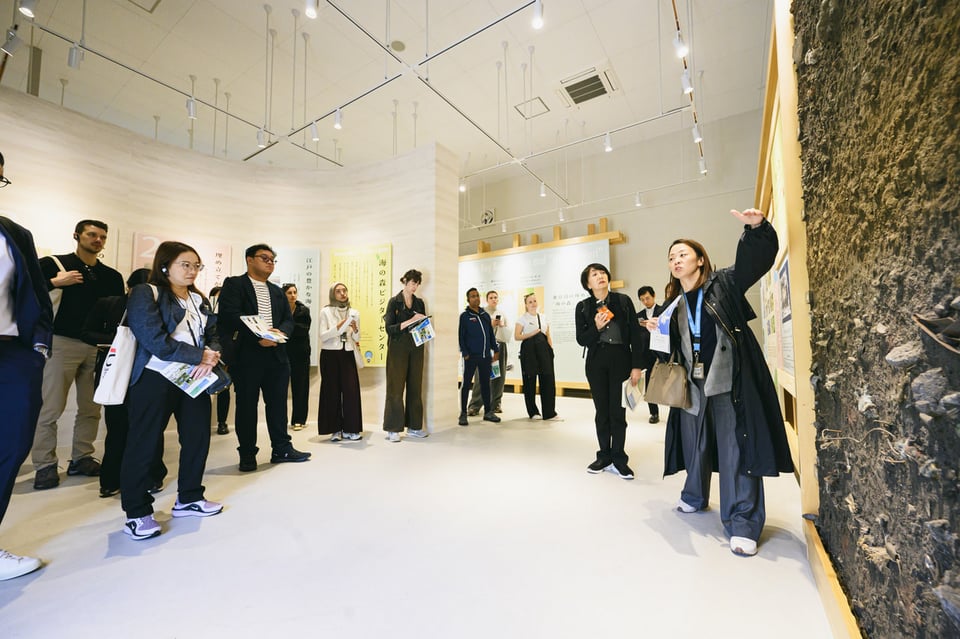
Participants listening to an explanation of replica soil layer samples installed inside the Umi-no-Mori Visitor Center.
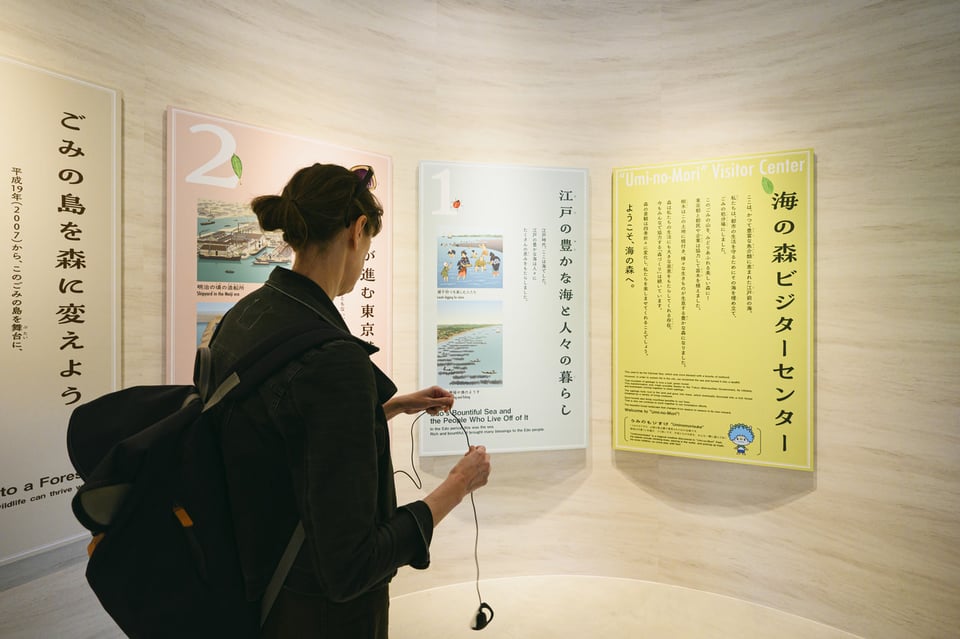
Exhibition panels explaining the history of Umi-no-Mori Park and the Central Breakwater Inner Landfill Site.
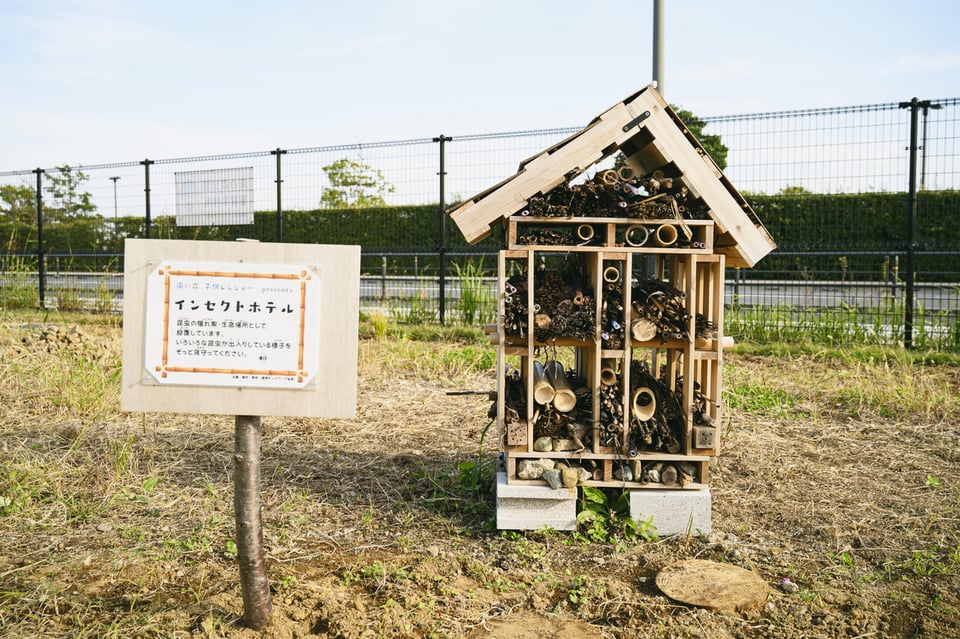
The Umi-no-Mori Resort Hotel (Insect Hotel) created by Umi-no-Mori Children Rangers, who conduct wildlife surveys and guide activities within the park.
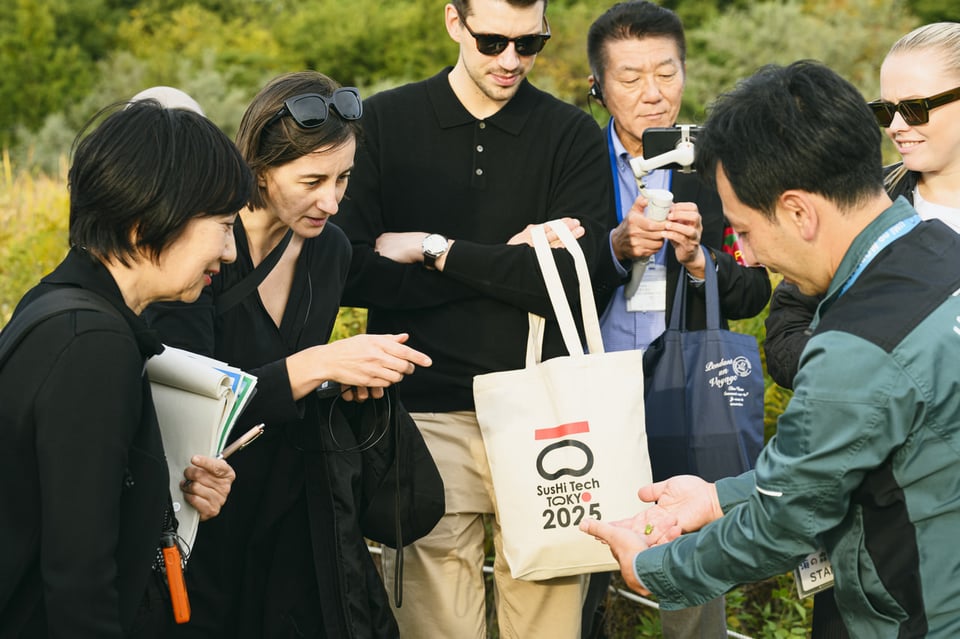
A designated park warden explaining biodiversity while holding a grasshopper.
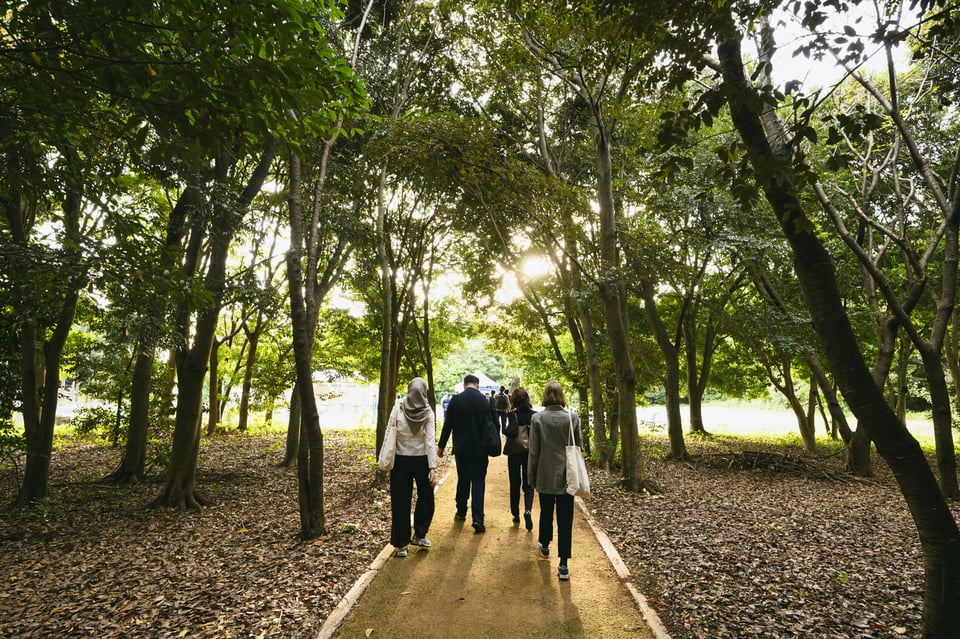
Activities to nurture the forest continue even after the completion of tree planting, carried out in cooperation with residents and companies.
While walking through the biotope installed by the Umi-no-Mori Children Rangers, who learn about Umi-no-Mori and carry out activities such as wildlife surveys and efforts to nurture the forest, and the Forest of Wind, planted with evergreen trees resilient to sea breezes that protect the park’s open spaces, participants observed species now rarely seen in Tokyo and actively asked staff questions about biodiversity and environmental conservation within the park.
・Exchange of Views
At the exchange of views held at TMG after the site tours, participants shared impressions of the wide-ranging initiatives under Tokyo Green Biz, asked questions about the strong cooperation between the public and private sectors, and discussed ways to promote public understanding. The knowledge shared through this site visit on urban greening will contribute to future collaboration among G-NETS member cities.
Participating Cities
Bangkok, Berlin, Brampton, Brussels, Jakarta, New Taipei, Riga, Tartu, Wellington, Zapopan (Alphabetical Order)