
February 27, 2026
TMG Visits Four European Cities: Site Visits to Water Infrastructure Supporting the Urban Water Cycle
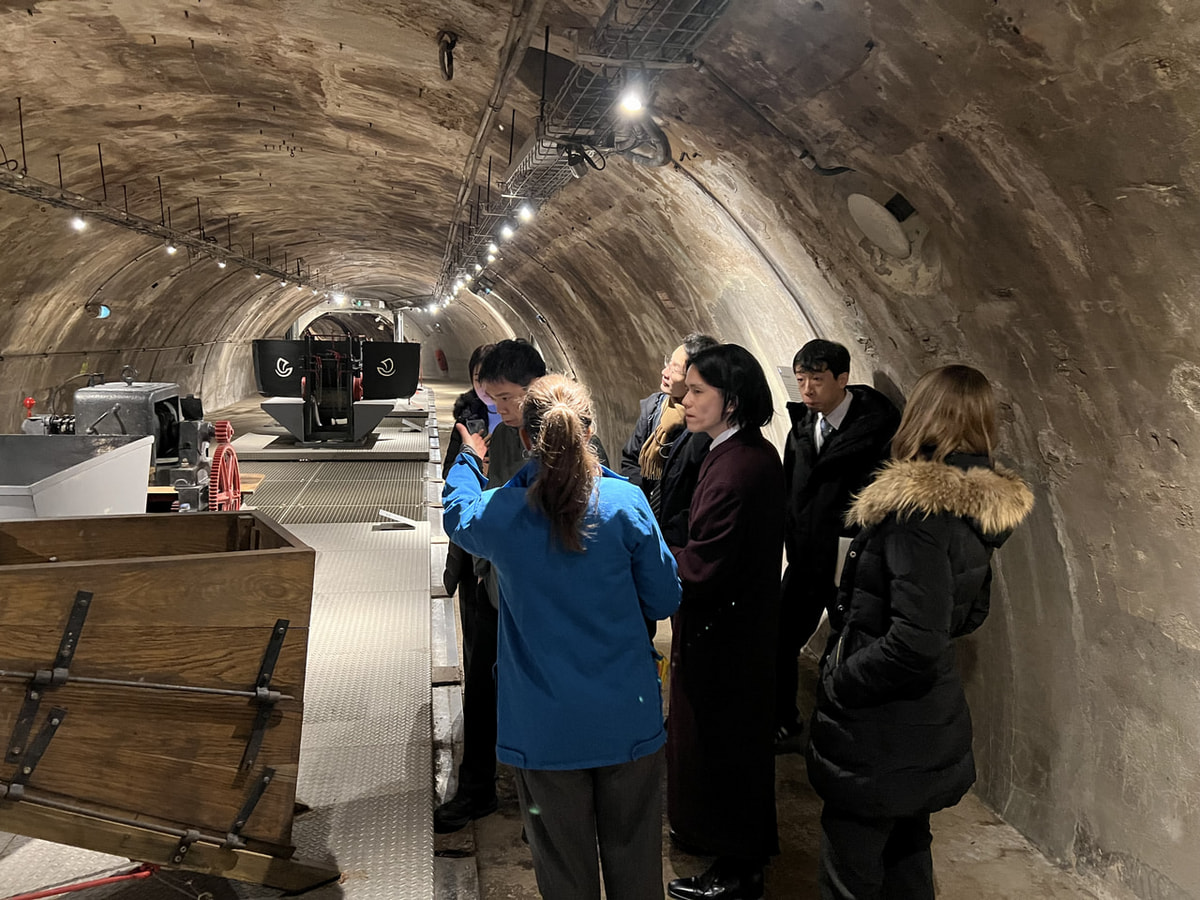
As part of a joint project involving working-level staff from G-NETS member cities, the Tokyo Metropolitan Government (TMG) visited water utilities in four European cities in November 2025. The delegation traveled to Paris (France), Brussels (Belgium), and The Hague and Amsterdam (the Netherlands), holding discussions on the operation of water services, challenges in water management, and advanced initiatives including digital transformation (DX) and environmental measures.
Key Site Visits
[25 November 2025]
・Eau de Paris (Water Utility), Paris, France
At Eau de Paris, the publicly operated water utility of the City of Paris, approximately 100,000 smart meters have been installed across the city, enabling the utility to collect highly accurate data at higher frequency without on-site visits. In addition, acoustic sensors are used for leak detection amid efforts to streamline and reduce labor and workload requirements for pipeline management.
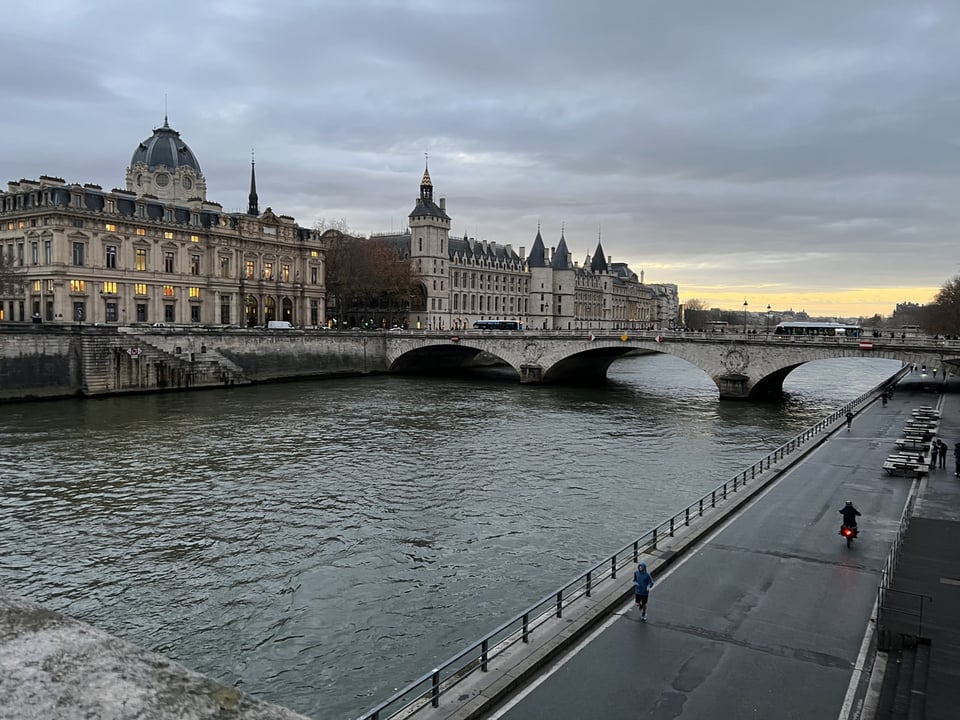
The Seine River flowing through central Paris, France.
・Site visits in Paris
The delegation first visited the Musée Carnavalet to learn about the history of water infrastructure developed during the urban redevelopment of the 19th century. They then observed an environmental campaign in which around 1,000 partner shops, cafés, and restaurants provide a free service to fill bottles with tap water. The delegation also visited drinking-water refill points (fountains) managed by Eau de Paris.
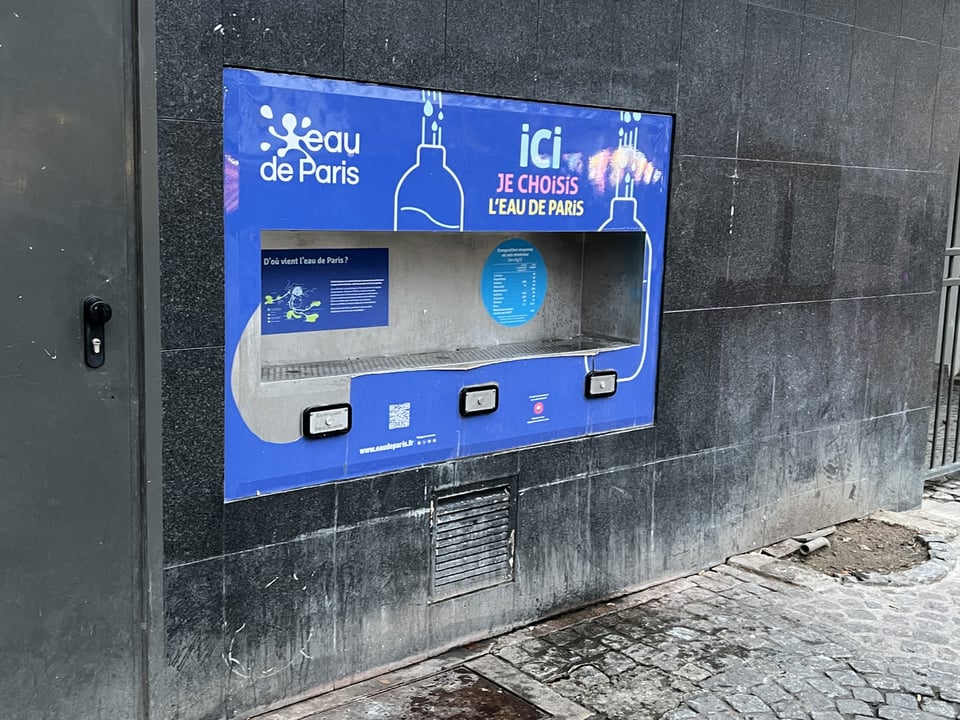
Eau de Paris manages approximately 1,200 fountains across the city; 17 of them also provide sparkling water.
[26 November 2025]
・Department of Sanitation and Water Management, City of Paris (Paris Sewer Museum)
In Paris, all water pipes—including both potable and non-potable networks—are installed within sewer tunnels, creating a system that allows leaks to be identified and repaired more easily. The city is also working to reduce rainwater inflow into sewers and, by utilizing the non-potable water network for purposes such as street cleaning, aims to reduce overall consumption of potable water.
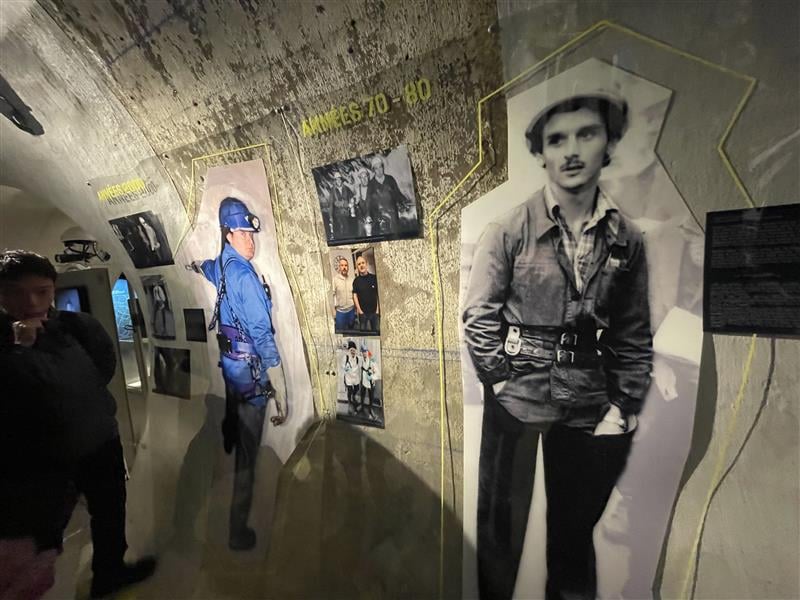
In addition to exhibits on history and equipment, the Paris Sewer Museum introduces the gear used by staff as well as a family involved in sewer maintenance management over three generations.
[27 November 2025]
・VIVAQUA Tailfer Water Treatment Plant, Brussels, Belgium
In Brussels, VIVAQUA—the integrated water and sewerage utility—provides services for approximately 2.5 million residents and industrial users, covering the full cycle from water intake and treatment to distribution, as well as wastewater collection. As electricity prices in Belgium vary by time of day, the Tailfer plant uses AI to manage water volumes and pump operating schedules, optimizing pump operations for energy efficiency. The plant also utilizes renewable energy, including biomass power generation and solar power.
・Water Tower in Bois de la Cambre, Brussels
The delegation visited a water tower built in the 19th century, which once pumped water from an aquifer beneath the forest and supplied southern districts of the city. The facility is no longer used for water supply and has been repurposed as office space.
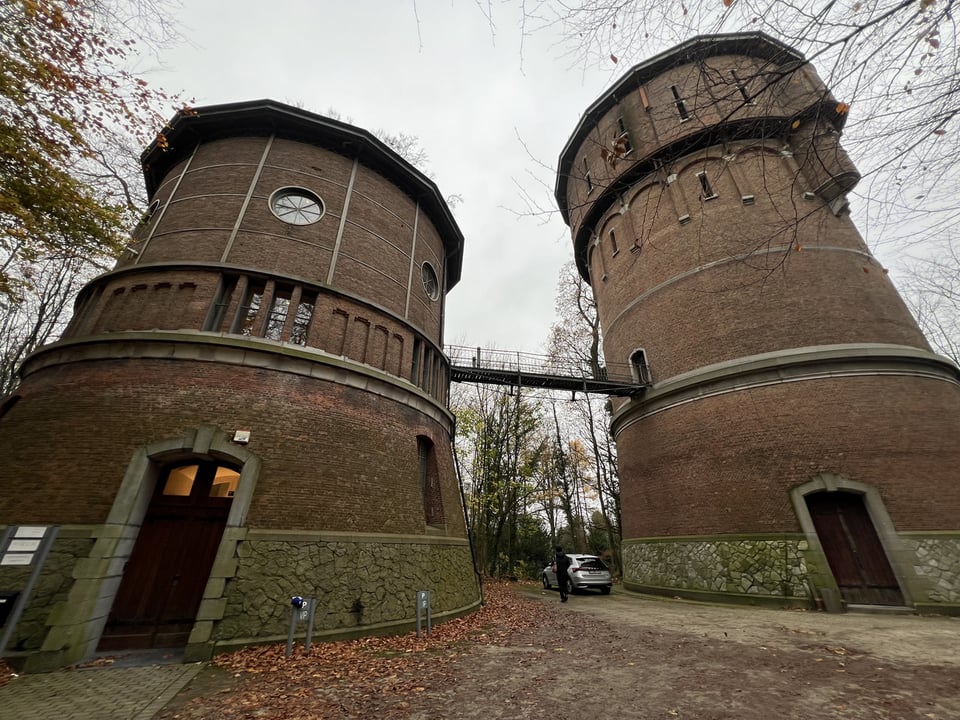
The water tower located in Bois de la Cambre; the tower on the left is currently reused as office space.
[28 November 2025]
・Vewin (The National Association of Water Companies in the Netherlands) , The Hague, the Netherlands
In The Hague, the delegation visited the Netherlands Waterworks Association and exchanged views on the current status and challenges of the water sector in the country. In particular, it was shared that contamination of water sources by PFAS (per- and polyfluoroalkyl substances) has become a serious issue in the Netherlands as well, underscoring the need for regulations and countermeasures at the European level.
・Waternet (Water and Sewerage Utility), Amsterdam, the Netherlands
Waternet employs a dune infiltration water treatment method utilizing sand dunes formed by sediment deposition in rivers. By combining this with activated carbon filtration and other processes, Waternet carries out treatment that leverages microorganisms in the sand and does not require chlorination. Waternet is also actively advancing DX and environmental measures, including AI-based predictive maintenance of facilities and electricity supply utilizing wind power.
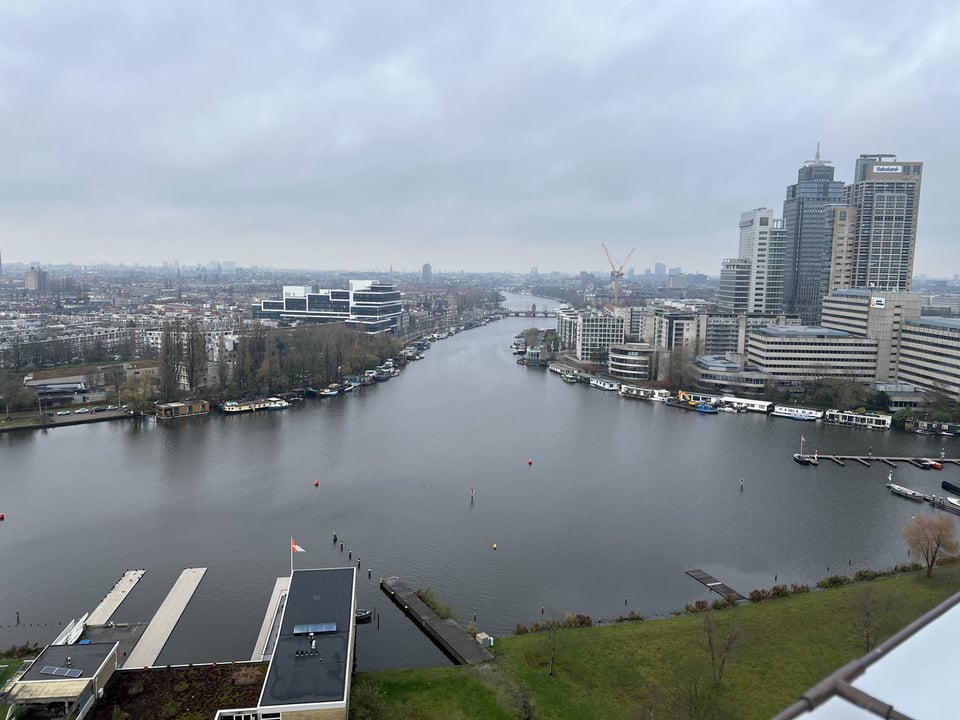
The Amstel River, also known as the origin of the city’s name.
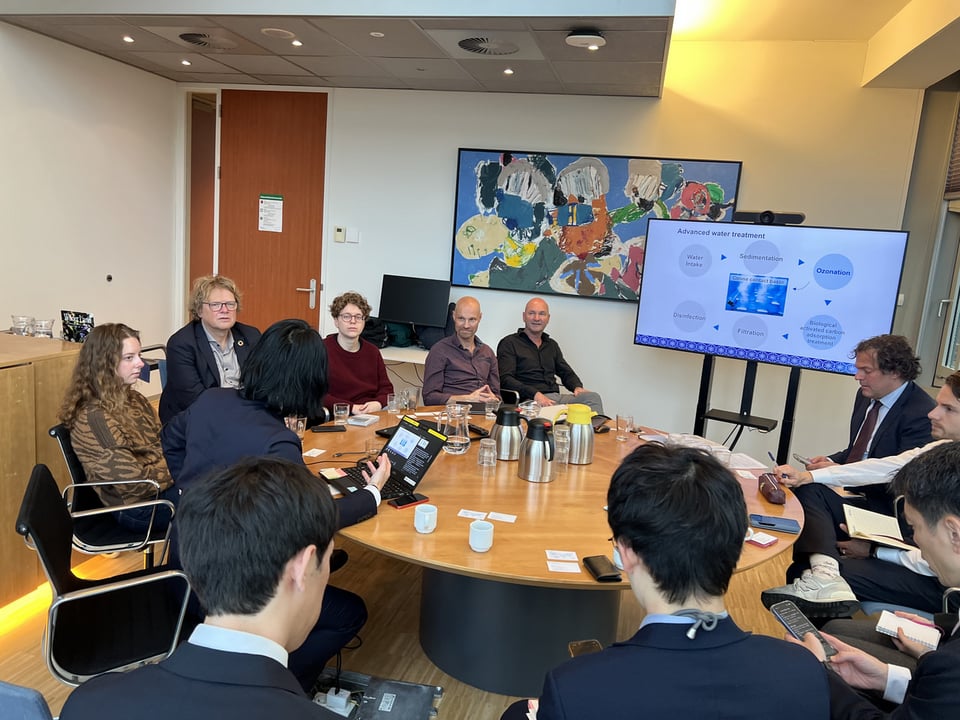
During the discussions, there was strong interest in TMG’s measures to prevent water leakage.
Through this visit to Europe, it became clear that each city, while taking into account differences in natural conditions and institutional frameworks, is working to enhance the sustainability of its water services by focusing on DX, environmental considerations, and relationship-building with residents, while also strengthening resilience against climate change and emergencies. These insights will be utilized in TMG’s future policy deliberations and in knowledge-sharing among cities participating in G-NETS.