
February 24, 2026
TMG Visits Three Cities in the Netherlands and Germany: Advanced Initiatives in Urban Sustainability and Resilience
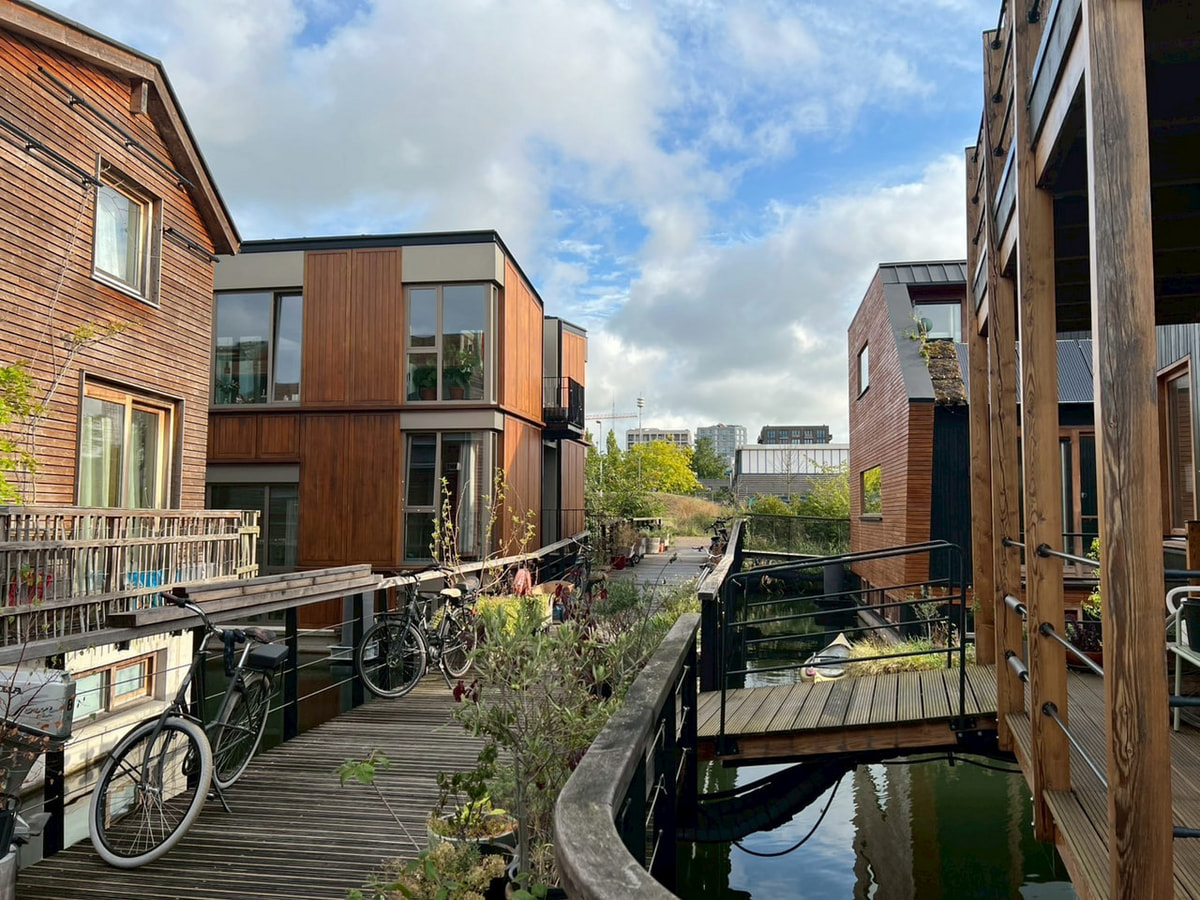
As part of a joint G-NETS working group project, working-level staff from the Tokyo Metropolitan Government (TMG) visited the cities of Amsterdam, Rotterdam, and Berlin from September 7 to 14, 2025. The visit aimed to further strengthen initiatives outlined in the Tokyo 2050 Strategy: Unlocking a Better Future, and focused on on-site investigations of advanced policies and case studies across four themes: urban development and housing, green and water systems, urban resilience, and zero emissions.
Background to the Site Visits
The four themes—urban development and housing, green and water systems, urban resilience, and zero emissions—form part of the 28 strategies set forth in the Tokyo 2050 Strategy: Unlocking a Better Future. In response to shared challenges faced by major global cities, including demographic change, climate change, and energy transition, the three cities visited are implementing advanced initiatives in across these four areas.
Urban Development and Housing
【City of Amsterdam】
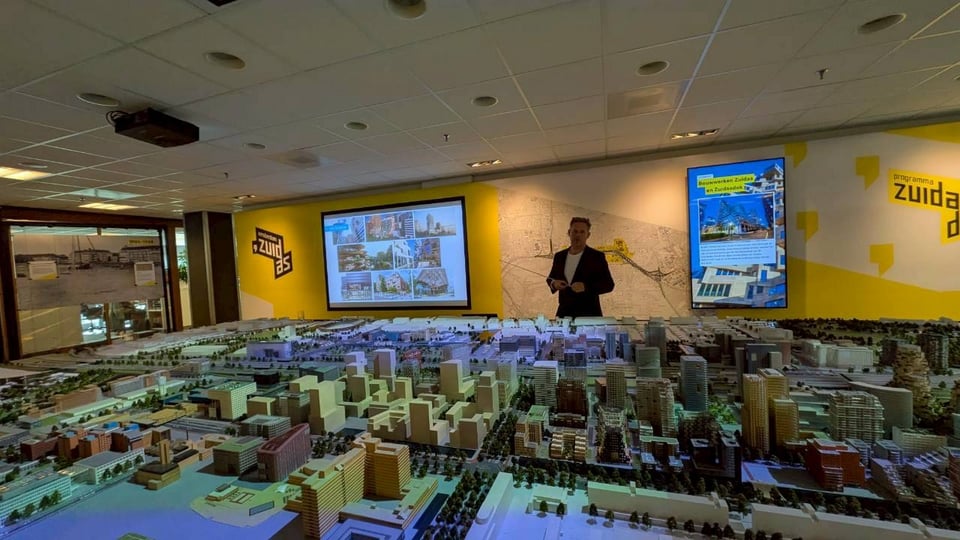
A City of Amsterdam official explaining policies in front of an urban scale model.
With its population increasing by approximately 10,000 people per year due to immigration and other factors, Amsterdam has introduced the “40-40-20 rule” to address rising housing prices caused by housing shortages. Under this system, new residential developments allocate 40 percent to price-regulated housing, 40 percent to housing for middle-income households, and 20 percent to market-rate housing for higher-income residents, thereby promoting the supply of affordable housing.
【City of Berlin】
Berlin is also addressing rising housing prices resulting from population growth. In the redevelopment of the Wasserstadt Spandau area, approximately 9,000 housing units are scheduled to be constructed by 2027 by public housing providers, with 50 percent designated for low-income households. In addition, the redevelopment of the Former Airport Berlin Tegel (Berlin TXL), which closed in 2020, will create a wooden mid-rise residential district capable of accommodating 5,000 households (approximately 10,000 residents) from 2026 onward. Incorporating geothermal energy use and rooftop greening, the project has attracted attention as a model for urban regeneration.
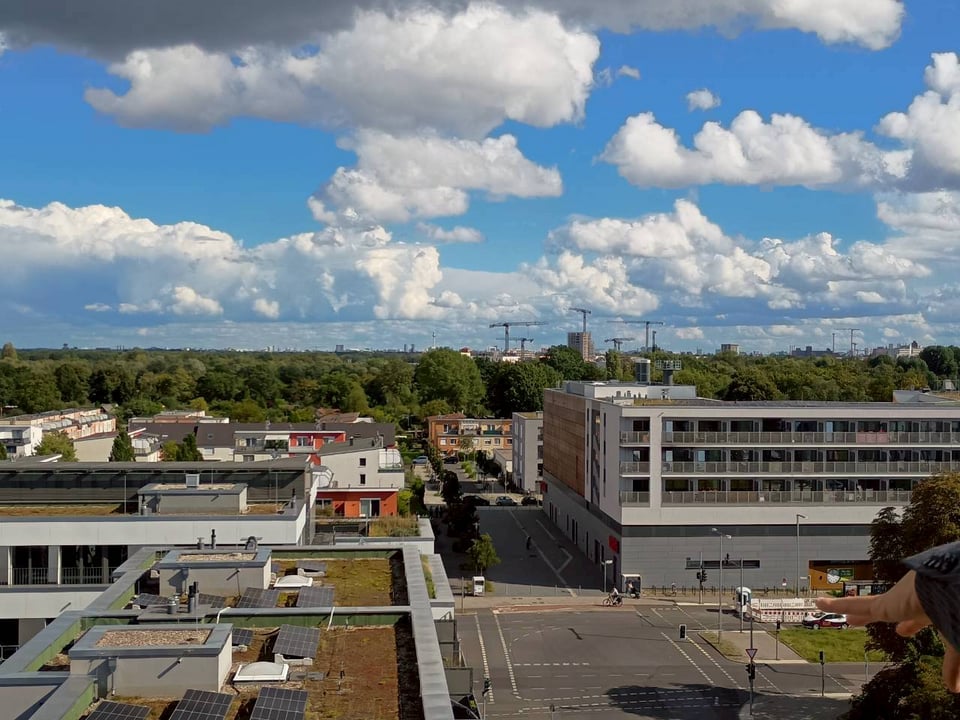
The Wasserstadt Spandau redevelopment area, where public housing providers supply 50 percent of units as housing for low-income households.
Green and Water Systems
All three cities visited by the delegation have established systems that store and circulate rainwater within urban areas by utilizing green infrastructure and related measures.
【City of Amsterdam】
Amsterdam has converted roadways into green spaces to promote water circulation through rainwater retention. The city has also formulated policies for rooftop greening, encouraging the greening of rooftops and balconies to support water management, air purification, and heat mitigation, while also aiming to enable coexistence with solar power generation.
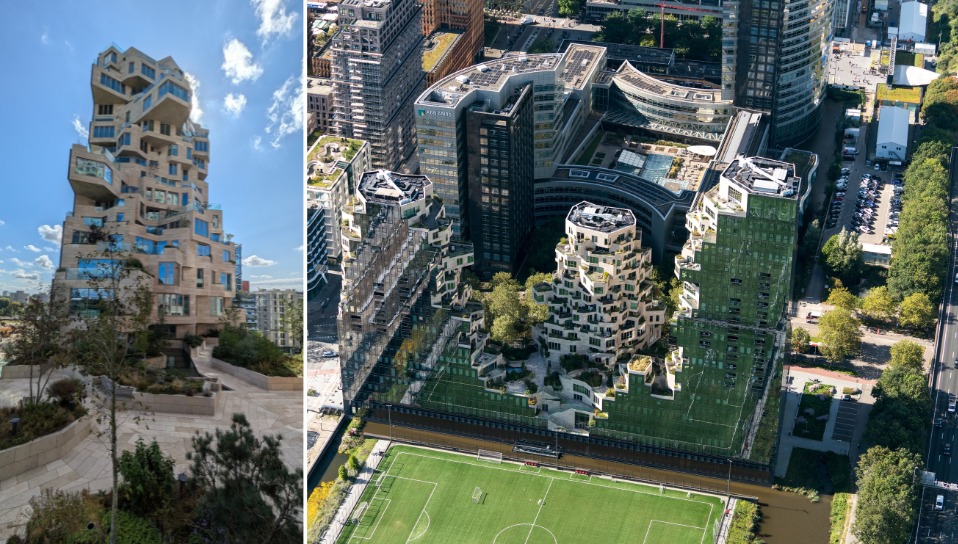
Left: Views of the rooftop and balcony greenery at Valley, the internationally renowned high-rise complex. Right: Zuidas redevelopment district, featuring roadways converted into green spaces and high-rise buildings with rooftop and balcony greening. (© Aerovista Luchtfotografie / Shutterstock)
【City of Rotterdam】
Rotterdam has developed a circulation system that collects, purifies, and reuses rainwater through the Hofbogenpark—a rooftop park created by repurposing the elevated structure of the Netherlands’ first electric railway line—and adjacent rain garden in the ZOHO district. Both facilities include dedicated access points for small animals, contributing to biodiversity conservation while also serving as community gathering spaces.
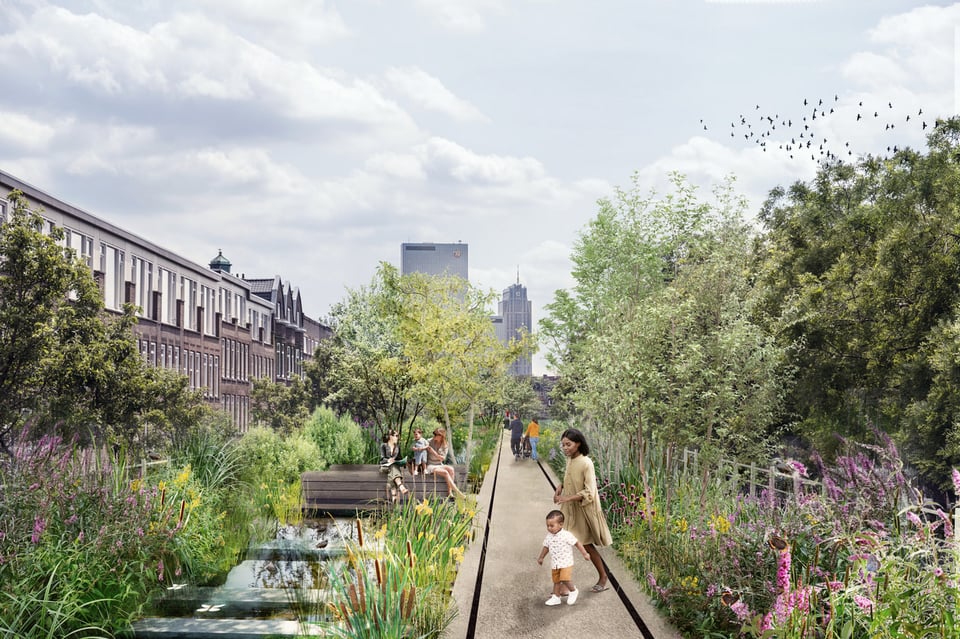
Hofbogenpark in the ZOHO district, featuring green infrastructure. (© De Urbanisten / DS landschapearchitects.)
【City of Berlin】
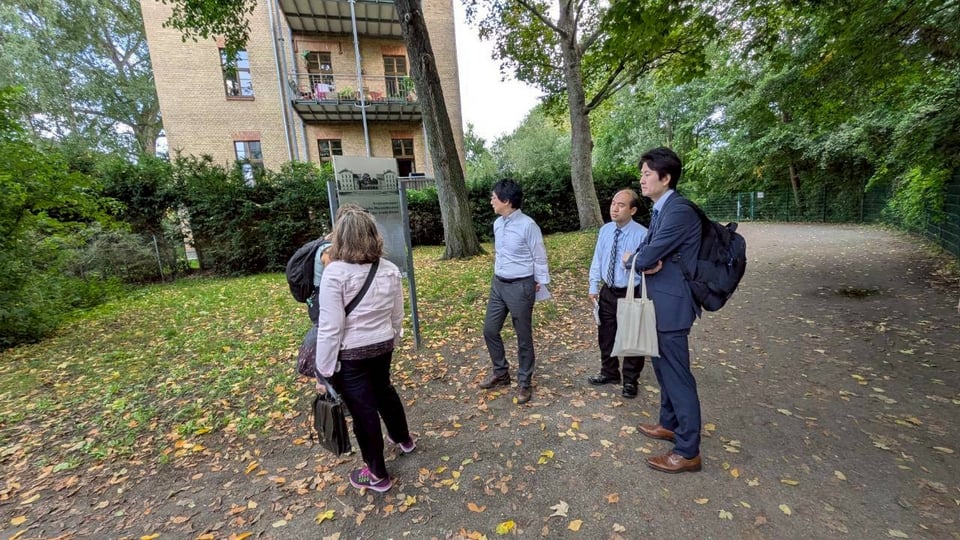
TMG staff observing water-retention green infrastructure in the Rummelsburg district.
Berlin relies on groundwater for its drinking water supply and has a high groundwater table. Due to soil contamination in many areas, initiatives to prevent rainwater from entering sewer systems have been underway for approximately 30 years. Following the establishment of the Berliner Regenwasseragentur (Berlin Rainwater Agency) in 2018, sponge city measures have been further advanced. In the Rummelsburg district, residential buildings have been constructed in which rainwater evaporates from rooftops, with the remainder stored in ground-level water-retention green infrastructure, preventing runoff beyond the site. The evaporation process is also considered to provide a cooling effect.
Urban Resilience
【City of Rotterdam】
In the Netherlands, where approximately one quarter of the country lies below sea level, Rotterdam faces particularly high risks, with around 85 percent of the city located below sea level. Measures against storm surges and heavy rainfall are therefore essential. Following severe storm surge damage in 1953, large-scale coastal protection infrastructure, including the Maeslantkering storm surge barrier at the entrance to the Port of Rotterdam, has been developed.
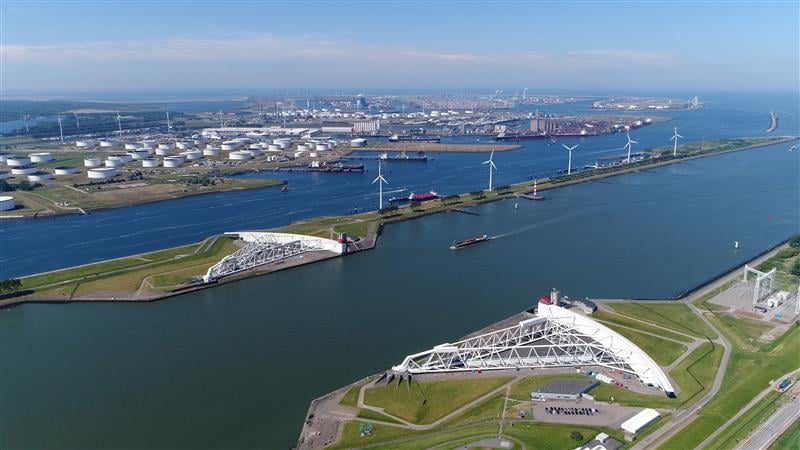
The Maeslantkering storm surge barrier, completed in 1997, undergoes a test closure once a year. (© GLF Media / Shutterstock)
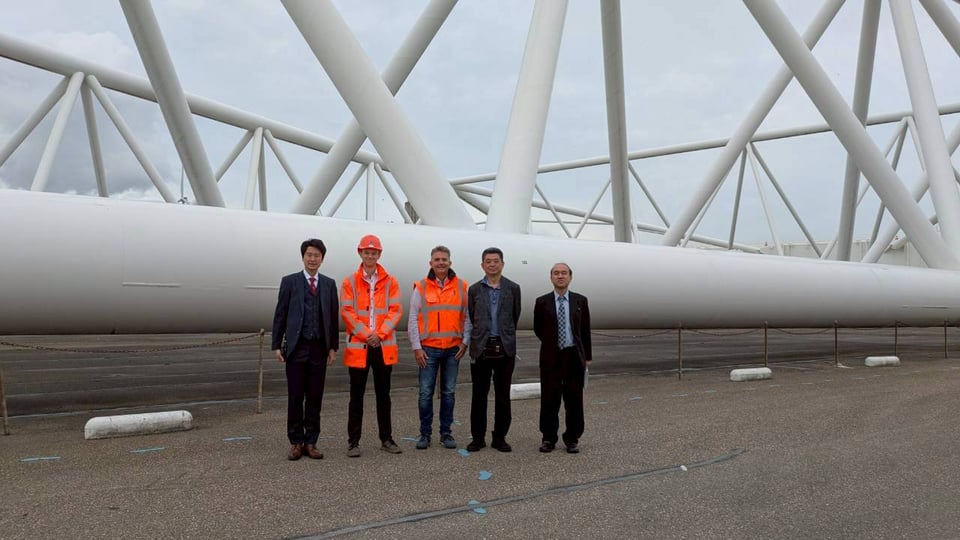
The Maeslantkering is designed with an assumed service life of 100 years.
Within urban areas, public spaces that combine everyday use with temporary rainwater storage functions, such as the Watersquare Benthemplein, are being developed across the city. In the ZOHO district in northern Rotterdam, the ZOHO Raingarden green infrastructure project is expected to help prevent local flooding by enabling gardens to function as sponges.
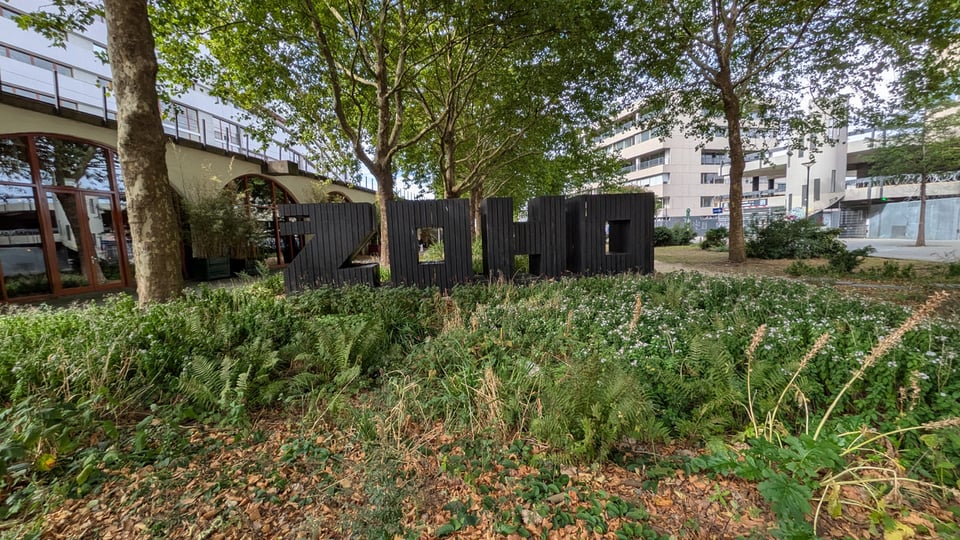
ZOHO Raingarden, a citizen-participatory green space that collects and purifies rainwater.
【City of Berlin】
Berlin’s sponge city initiatives, driven by an increase in localized heavy rainfall events in recent years, are positioned not only under “green and water systems” but also as a key measure for urban resilience. Systems that treat, collect, purify, and evaporate rainwater on-site, rather than discharging it into sewers, also contribute to reducing flood risks during heavy rainfall events.
Zero Emissions
【City of Amsterdam】
At the national level, the Netherlands is promoting offshore wind energy infrastructure through the Windenergie Infrastructuurplan Noordzee (WIN; North Sea Wind Energy Infrastructure Plan) and hydrogen energy, advancing a transition toward urban and industrial structures based on renewable energy. In Amsterdam, floating housing developments powered by renewable energy and experimental districts aimed at realizing a circular society represent symbolic examples of this transition.
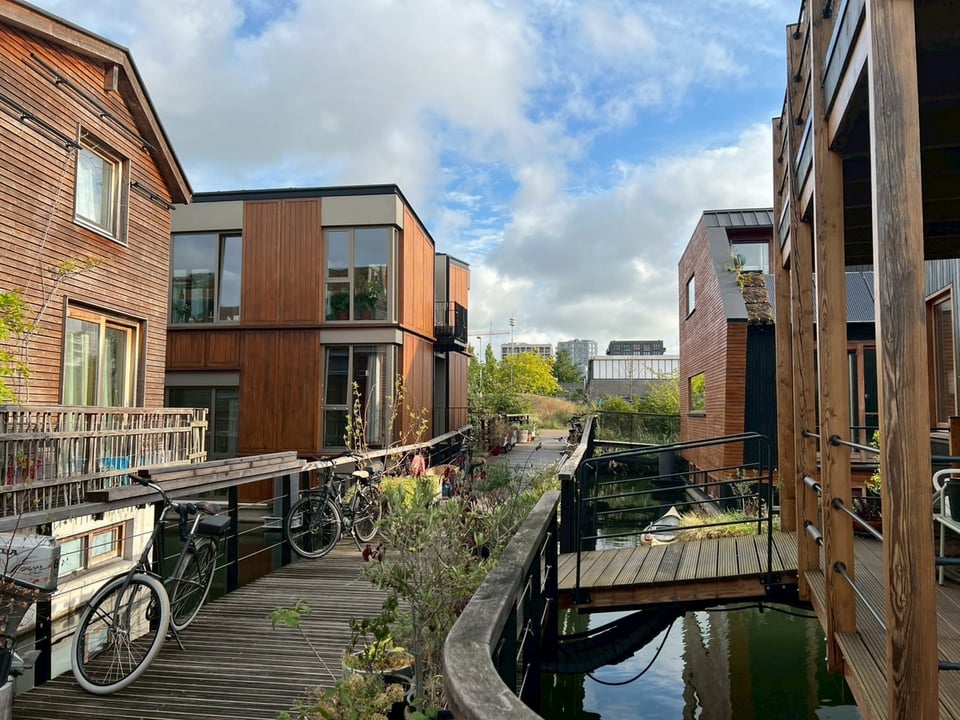
Schoonschip floating housing, which achieves energy self-sufficiency through solar power generation, heat pumps, and storage batteries.
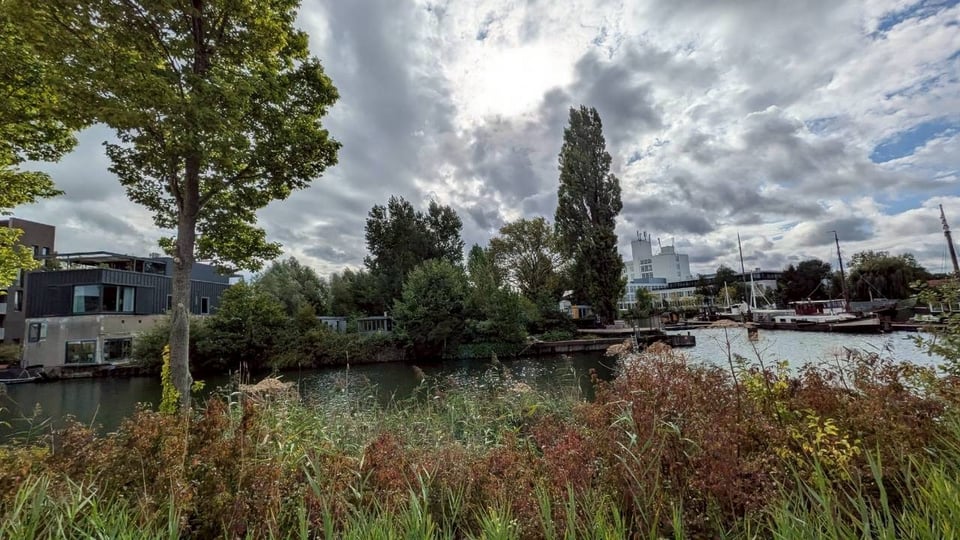
De Ceuvel, an experimental district redeveloped from a former shipyard, where reclaimed materials are widely used.
【City of Berlin】
In Berlin, citizen-participatory renewable energy transition measures are advancing through initiatives such as the introduction of mandatory photovoltaic installation in 2023 and support for plug-in solar systems. Plug-in solar systems are small photovoltaic units that can be used simply by plugging them into household outlets without construction work, and their adoption is rapidly increasing across Germany.
In large-scale redevelopment projects such as Berlin TXL, strategies including geothermal energy use, construction of wooden residential complexes, and utilization of resource-circulating materials are positioned as integral components of redevelopment planning.
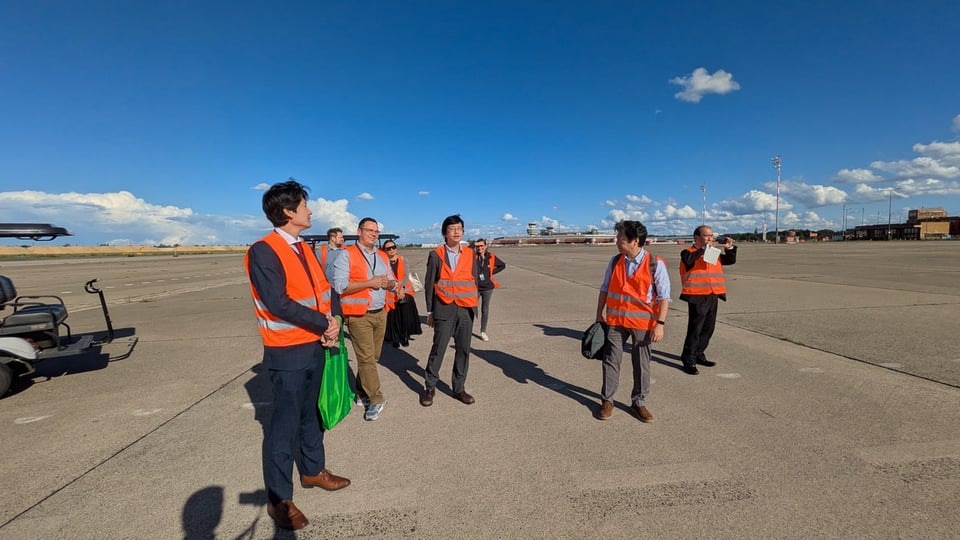
TMG staff visiting Berlin TXL, the former Tegel Airport site closed in 2020.
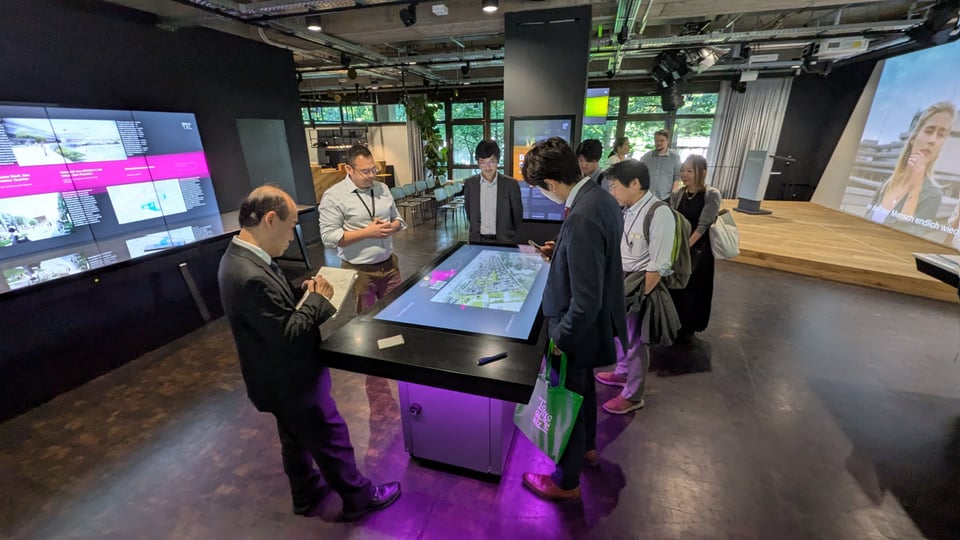
TMG staff receiving an explanation of redevelopment plans at the Berlin TXL exhibition facility.
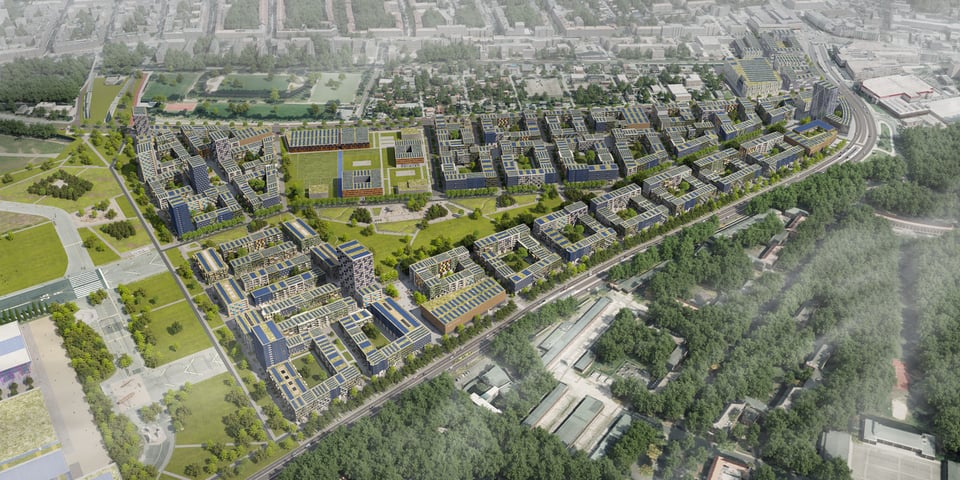
Berlin TXL is also expected to serve as an advanced urban model for sponge city development through the use of green infrastructure. (© Tegel Projekt GmbH / Macina)
Through this visit, it became clear that the three cities are addressing urban development and housing, green and water systems, urban resilience, and zero emissions in an integrated manner, simultaneously advancing climate change measures and improving quality of life. The insights gained from observing these advanced initiatives will be utilized in future policy deliberations by TMG and shared through the G-NETS network to support collaboration among participating cities.