
September 30, 2026
Why Tokyo’s Approach Is Drawing Global Attention: G-NETS Connects Cities through Knowledge Sharing on Disaster Prevention and Waste Management
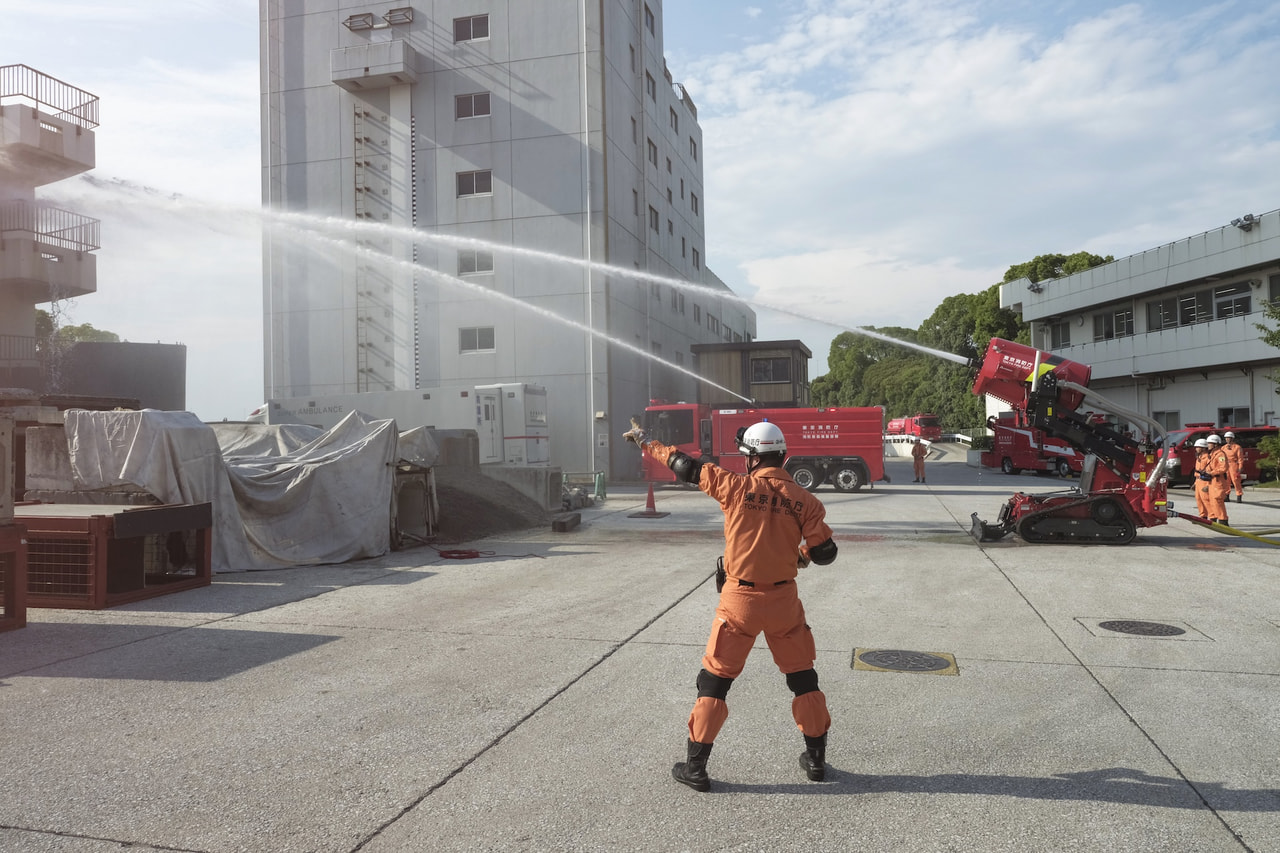
Rescue drills conducted at the Fire Rescue Task Forces, 2nd Fire District Headquarters
As part of a G-NETS joint project, 20 working-level staff from 15 cities worldwide visited Tokyo on July 30 to 31, 2026, for a two-day site visit focused on disaster prevention and waste management.
What consistently drew their attention was the scale of Tokyo’s investment in preparedness, its capacity to translate budgets into concrete action, and the frequency of its training exercises. As they observed how Tokyo addresses the complex challenges posed by high population density, earthquakes, flooding, high-rise buildings, and outlying islands, participants considered how these issues related to the challenges facing their own cities.
1. Tokyo’s Disaster Preparedness through the Eyes of 15 Global Cities
Disaster Preparedness Challenges Facing Cities Worldwide
Many participating cities confront distinct challenges shaped by their geography and scale. Throughout the visit, participants candidly described the difficulties they face, including residents who are reluctant to evacuate during floods and fire departments operating with only a single helicopter.
Tokyo’s Measures to Halve Damage from a Major Earthquake Directly Beneath the Capital
The Tokyo Metropolitan Government (TMG) has set a goal of halving deaths and building damage caused by a major earthquake occurring directly beneath the capital by 2030. Central to this strategy are improving earthquake resistance and making buildings more fire-resistant. Over the past decade, the seismic retrofitting rate of residential buildings has increased from 81.2% to 92.0%, while the fire-resistant building ratio in designated improvement areas has risen from 58.4% to 64.0%. Underground utility projects have also progressed steadily, particularly in the Center Core Area, where urban functions are highly concentrated, and along primary emergency transportation roads connecting key facilities.
Tokyo’s rapid response begins with its own personnel. Approximately 300 TMG staff members live in designated government housing near the TMG Building and are ready to report for duty immediately after a disaster. When participants asked how communication is maintained if mobile networks fail following a major earthquake, officials explained that disaster management radio communication networks are installed at assembly points. Roughly two hours after a disaster, the first meeting of the Disaster Response Headquarters, led by the Governor, is convened. During large-scale disasters, the response ultimately involves tens of thousands of metropolitan government employees.
Delegates from 15 Cities Visit the Front Lines of Tokyo’s Disaster Response
On the first day, participants visited the Tokyo Fire Department Headquarters Command and Control Center. The center handles approximately 1.21 million emergency calls each year—an average of 3,334 calls per day, or one every 26 seconds. Asked about the increase in call volume in recent years, officials cited population growth and an aging society. The dispatch center also provides three-way interpretation services in English, Chinese, Korean, Portuguese, and Spanish, enabling operators to respond to emergency calls from non-Japanese speakers.
Participants also visited the Emergency Consultation Center, which provides 24-hour, year-round advice for residents unsure whether to call an ambulance or seek medical attention. Staffed by physicians, nurses, and emergency consultation personnel, the center handled approximately 503,000 consultations in 2025. A participant from Riga commented that this service represents “the first crucial stage in allocating limited human resources efficiently.”
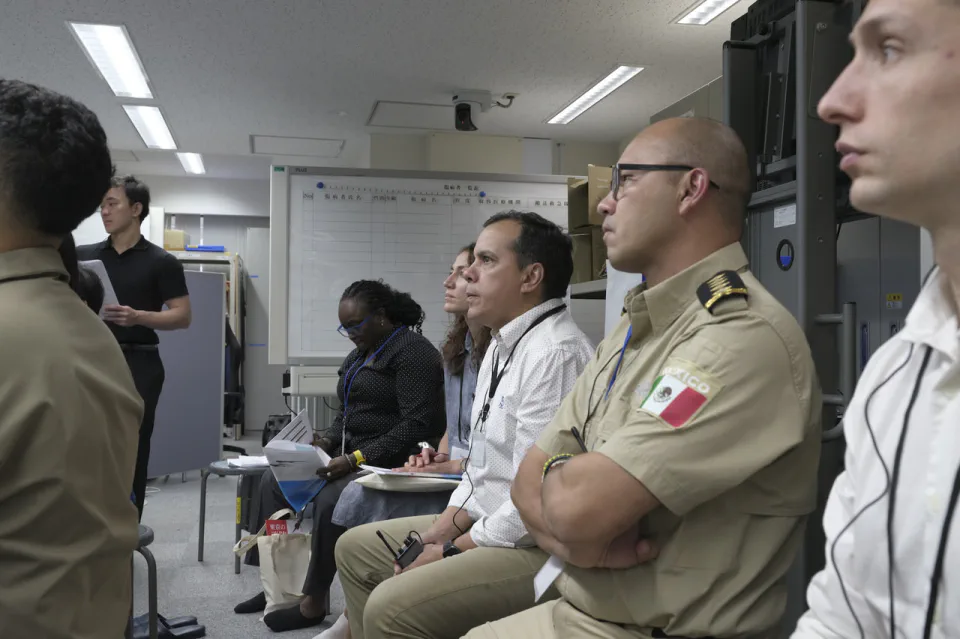
Participants listening to a briefing at the Tokyo Fire Department Headquarters
The next stop was the Tokyo Fire Department Aviation Unit at the Koto Aviation Center, which serves as Tokyo’s “fire department in the sky.” Operating a fleet of eight helicopters—four large and four medium-sized aircraft—it conducts a wide range of missions, including aerial reconnaissance, firefighting, mountain and water rescues, and emergency medical services in inland Tokyo and in the Izu Islands. Participants from Durban asked about nighttime operations and learned that helicopter operations are restricted for certain types of emergencies, such as mountain rescue, because flying at night involves greater risks.
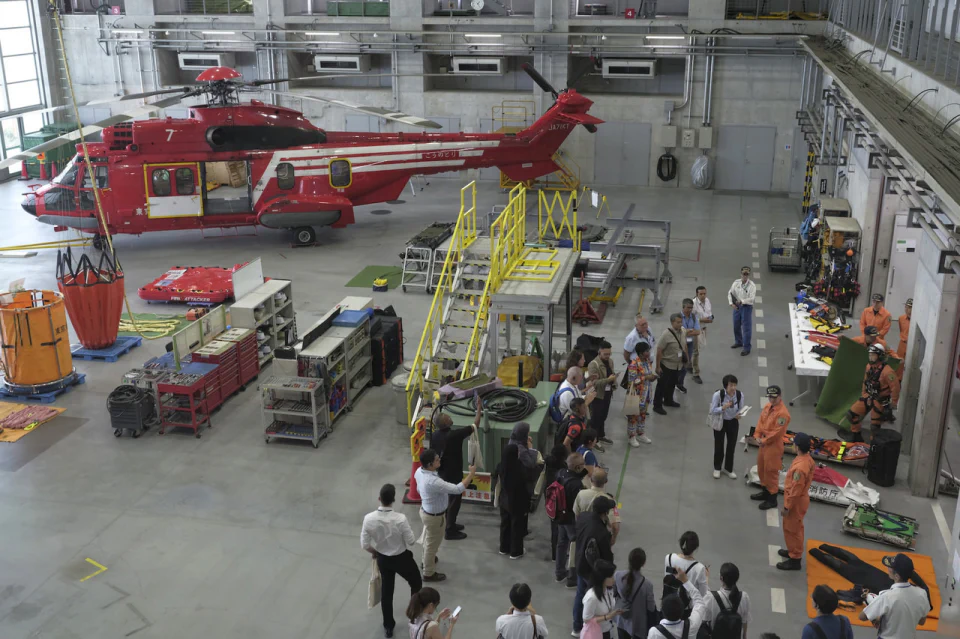
At the Koto Aviation Center, helicopters and equipment such as firefighting equipment were showcased
Participants also visited the Fire Rescue Task Forces, 2nd Fire District Headquarters. This specialized unit uses heavy machinery and advanced rescue equipment to respond to incidents that are difficult to manage through ordinary firefighting operations alone. Demonstrations included a life-detection radar capable of locating survivors beneath collapsed structures and the “Super Pumper,” a high-capacity pump capable of moving 8,000 liters of firefighting water per minute. Rescue drills simulating actual disaster conditions were also conducted.
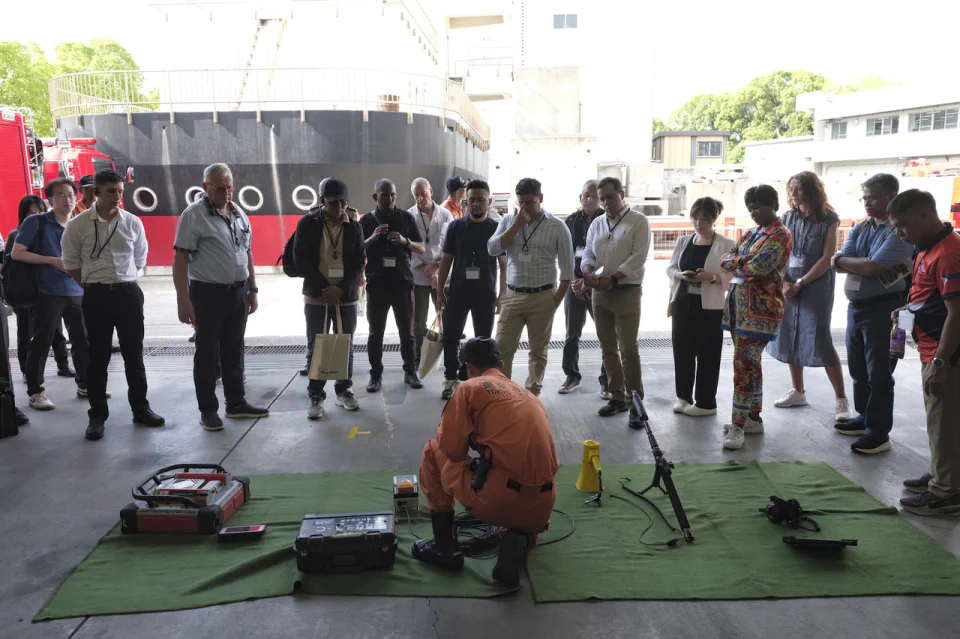
A briefing was given on the advanced rescue equipment used by the Fire Rescue Task Forces
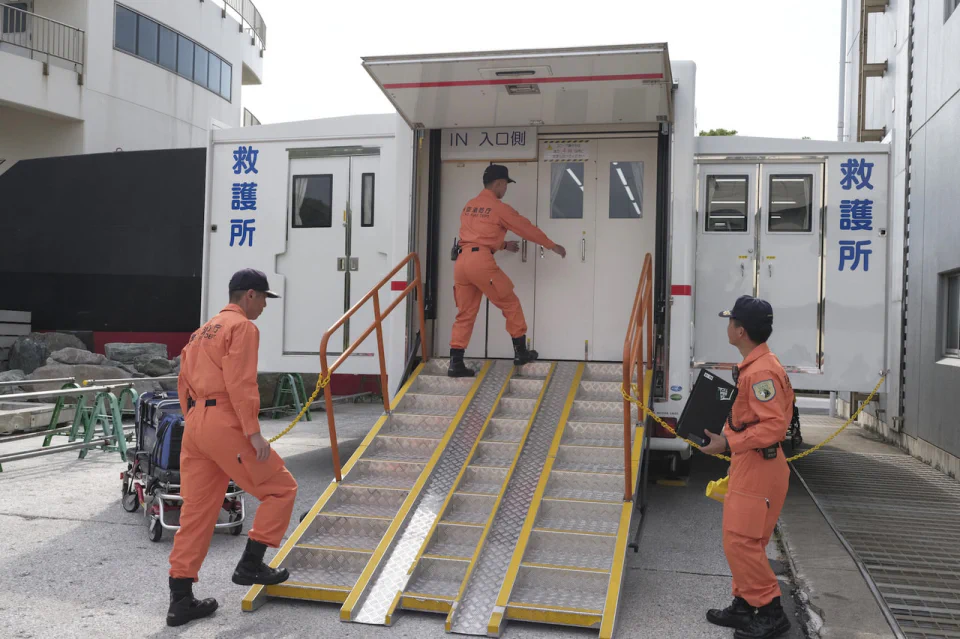
Tour of a large, specialized ambulance that can also serve as a makeshift first-aid station
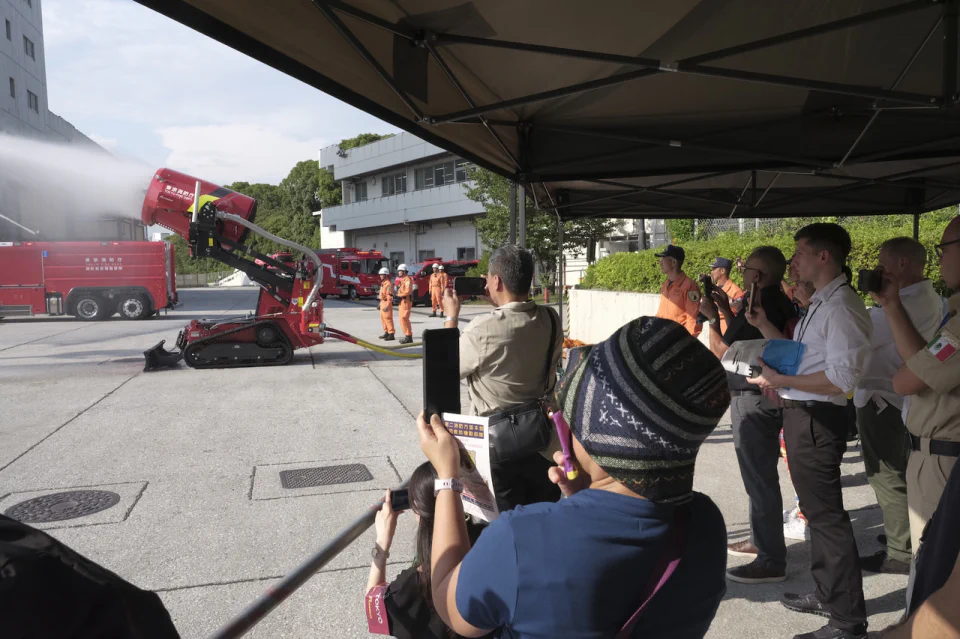
Participants watching rescue drills conducted at the Fire Rescue Task Forces
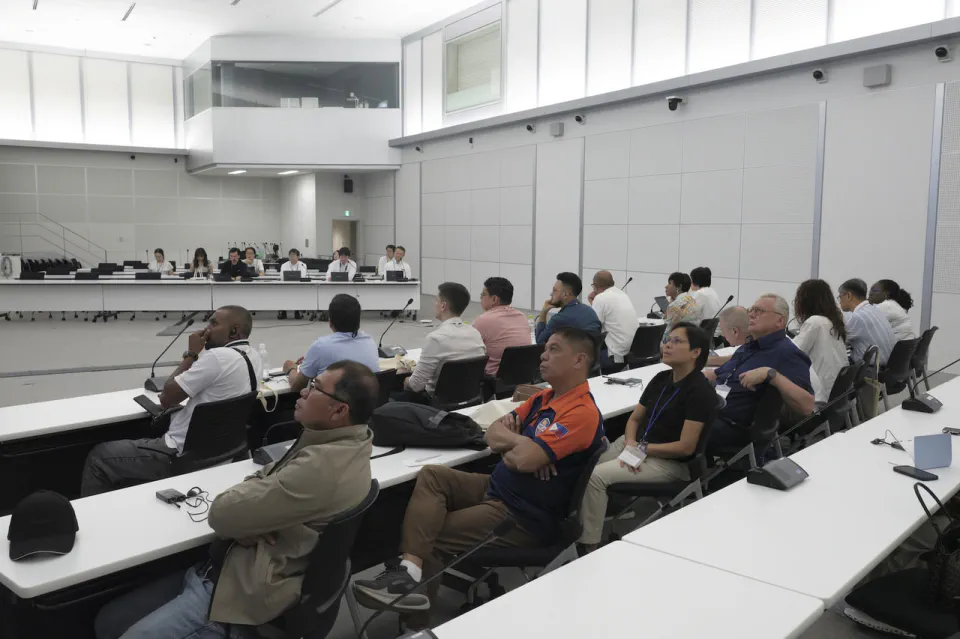
A comprehensive overview of TMG’s disaster response measures at the Disaster Management Center
On the second day, participants visited the Disaster Management Center within the Bureau of General Affairs. Serving as the operational hub of Tokyo’s emergency response system, the center supports disaster-response decision-making through real-time information sharing. Responding to a question from Manila about how evacuation information is consolidated, officials demonstrated how evacuation and damage information submitted by wards and municipalities is centrally managed through the TMG Disaster Information System. Participants expressed strong interest in AI tools used to monitor and analyze misinformation circulating on social media, as well as Tokyo’s cross-departmental response structure, under which specialist staff from multiple TMG bureaus are mobilized during emergencies.
2. Waste Management Supporting the Lives of 10 Million Residents
The Realities of Waste Management across Participating Cities
Circumstances varied from city to city. Some lacked waste separation systems; others had experienced landfill fires that severely affected residents; and in some cities, people made a living by collecting waste at disposal sites, where fatal accidents had occurred. Each city faced urgent challenges related to waste management.
Tokyo’s Environmentally Responsible Landfill Sites
Waste generated each day by approximately 10 million residents of Tokyo’s 23 wards undergoes intermediate treatment, such as incineration and crushing, before the remaining material is transported to final disposal sites in Tokyo Bay.
The landfill sites employ the “sandwich method,” in which every three-meter layer of waste is covered with 50 centimeters of soil. The layers are ultimately built up to a height of approximately 30 meters. This approach helps protect the surrounding environment by preventing waste from scattering, reducing the spread of odors, controlling pests, and lowering the risk of fires. Methane gas generated by decomposing waste is used to produce electricity, supplying some of the power needed at the site.
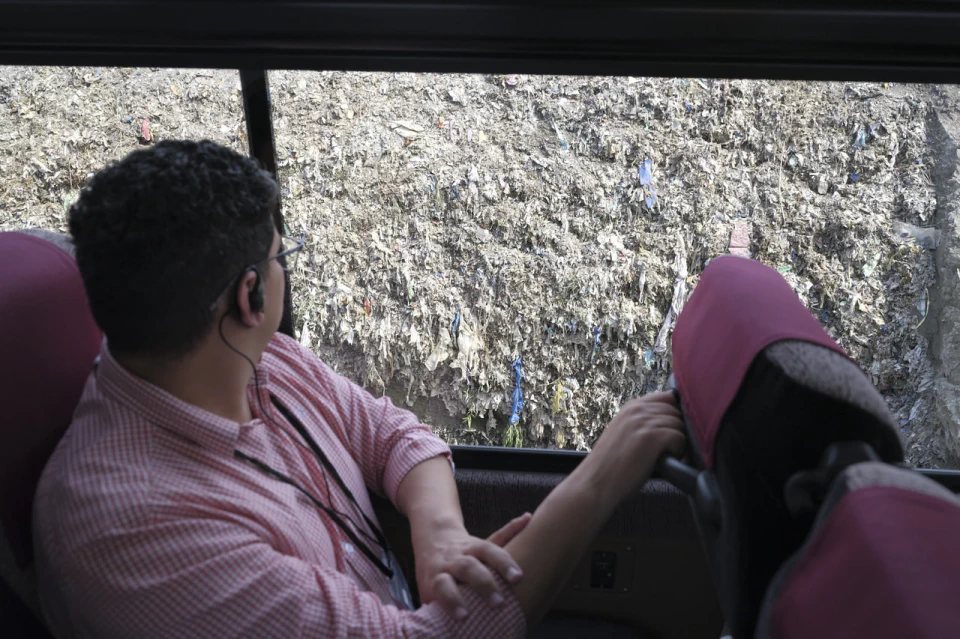
Participants expressed admiration for the lack of odor from the landfill, which uses the sandwich method
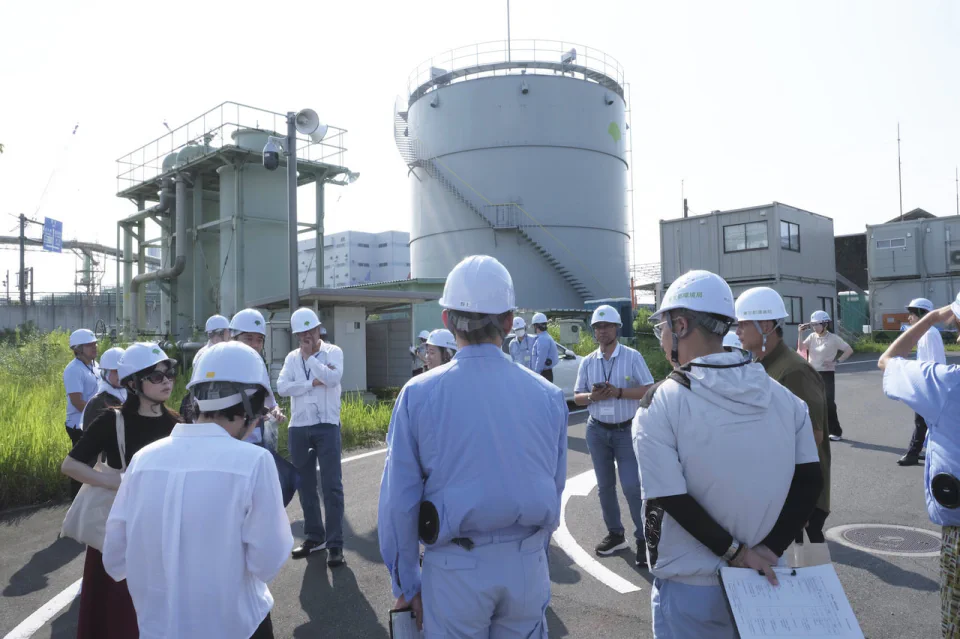
A tour of the methane gas treatment and power generation facilities within the landfill was also conducted
Delegates from 15 Cities Observe Safety Management and Resource Utilization at Tokyo’s Landfill Sites
Participants visited both the Central Breakwater Outer Landfill Site and the New Sea Surface Disposal Site in Tokyo Bay. They observed the sandwich method in operation, wastewater treatment processes, and a live demonstration of firefighting procedures for landfill fires. Just as former landfill sites have been transformed into parks and sports facilities, these reclaimed areas may one day become spaces open to the public. A participant from Davao remarked that Tokyo’s ability to safely manage landfill sites while generating electricity from methane gas was “something I want to tell our mayor when I return home.”
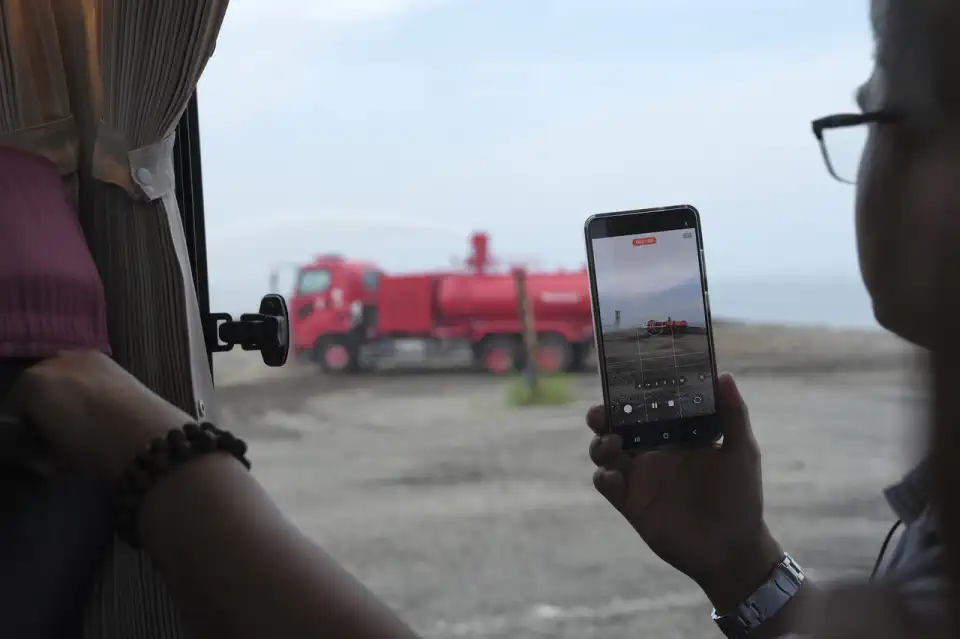
Firefighting drill simulating a fire at the disposal site
Exchange of Opinions Reveals City Priorities and Shared Challenges
During the exchange-of-opinions session on the final day, different aspects of Tokyo’s approach stood out to participants depending on the circumstances of their own cities. One theme, however, was shared across many delegations: budgets and how they are used.
A participant from Nairobi observed, “TMG is far ahead of us in setting budgets, adhering to them, and implementing projects as planned,” highlighting the effectiveness of Tokyo’s budget execution.
Cities’ priorities reflected their local realities. Participants from flood-prone Davao contrasted Japan’s culture with the challenges they face, remarking that “there is a strong sense of discipline in Japan.” Many cities also expressed strong interest in Tokyo’s Disaster Management Center and its routine combination of tabletop and field exercises.
Participants also raised their own concerns. A representative from Brampton highlighted the challenge of effectively providing multilingual disaster information to vulnerable populations and immigrant communities. Tokyo officials responded by explaining that the city has continuously improved its disaster management after each major event, adding, “There is still room for improvement, and we hope to learn from you as well.”
Discussions on strengthening community resilience also explored the role of neighborhood associations in Japan. Officials noted that social ties have weakened with the growth of high-rise residential buildings and an influx of new residents, leading Tokyo to expand direct communication through disaster preparedness apps and printed guides distributed to every household.
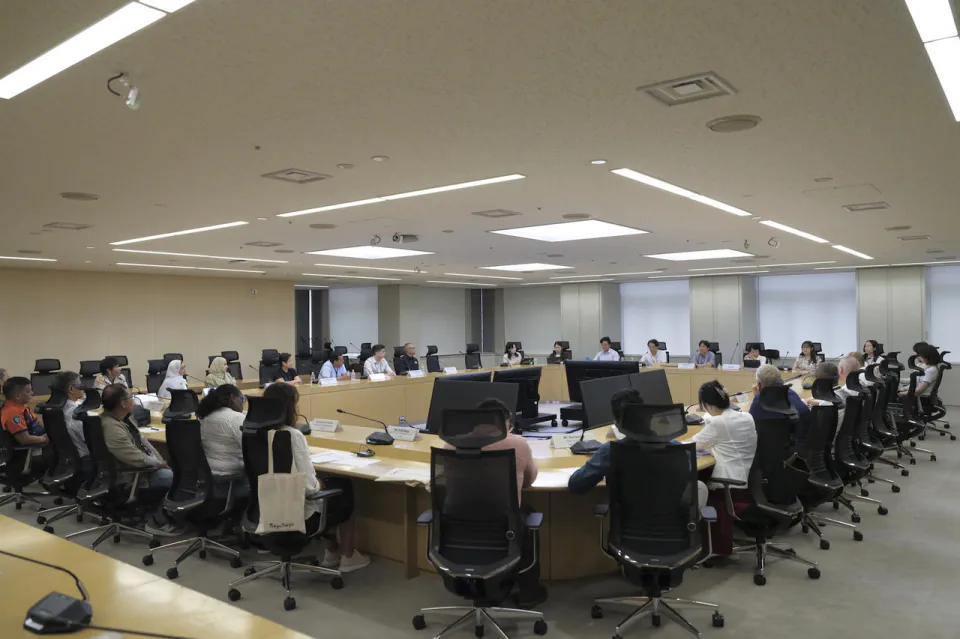
On the final day of the site visit, a discussion session was held at the Tokyo Metropolitan Government Building
From Lessons in Tokyo to New Partnerships—Expanding Intercity Collaboration
G-NETS is a network established by the Tokyo Metropolitan Government in 2022 to help cities share common challenges and explore solutions together.
The conversations initiated during this site visit are expected to continue beyond Tokyo. A participant from Durban expressed particular interest in Tokyo’s system of assigning dedicated disaster preparedness officers across government departments and conducting regular training exercises. She expressed interest in having Tokyo officials share these practices with others in her country, noting that it can be difficult to build broad support through her efforts alone. Hearing directly from Tokyo, she said, would give many cities an opportunity to learn from its experience.
The discussions revealed that many issues—including budgeting, evacuation behavior, and raising public awareness of disaster preparedness—are shared by cities worldwide, although the degree to which they faced these issues varied. Zapopan’s question about encouraging reluctant residents to evacuate sparked discussion among participants facing similar challenges.
Rather than serving as a one-way site visit, the visit became an opportunity for cities to exchange knowledge as equals. That spirit of mutual learning ultimately captured the purpose of the G-NETS network itself.
Participating Cities
Brampton, Buenos Aires, Cali, Davao, Dubai, Durban, Manila, Nairobi, Riga, San Salvador, Seoul, Tartu, Thinadhoo, Wellington, Zapopan (Alphabetical Order)