
October 28, 2026
Brought Together by G-NETS: 13 Cities Worldwide Learn How Tokyo Trains the People Behind Its Water Supply and Sewerage Facilities
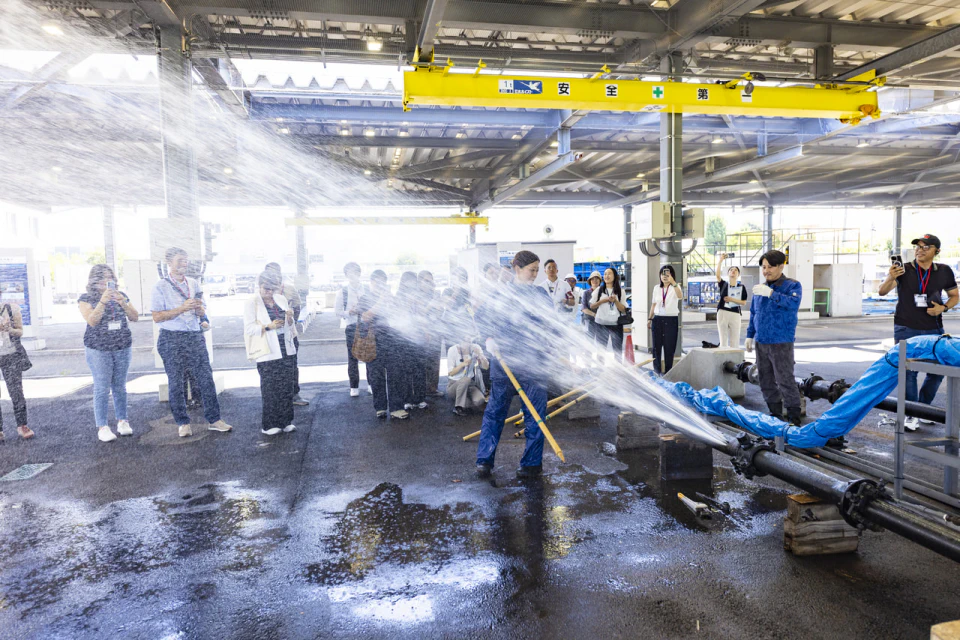
Demonstration of a water pipe leak repair
As part of a G-NETS joint project, 18 officials from 13 cities worldwide visited Tokyo on August 24 to 25, 2026, for a two-day study tour focused on sewerage and water supply.
Beyond Tokyo’s facilities and technologies, the city’s approach to training the people who operate them drew significant attention. Participants gained practical experience beyond classroom learning at two different facilities: walking both with and against the flow of water through a facility replicating a sewer pipe, and using VR to simulate workplace accidents in water supply operations. During the exchange of views, they reflected on these experiences in relation to the challenges and initiatives in their own cities.
① Tokyo’s Sewerage System through the Eyes of 13 Global Cities
Sewerage Challenges Facing Participating Cities
The participating cities face a range of challenges reflecting their different circumstances. In Jakarta, sewerage coverage is still developing, with citywide expansion set as a long-term goal. Davao cited insufficient sewer pipe capacity amid population growth, as well as illegal waste dumping that contributes to flooding. Nouakchott highlighted its reliance on septic tanks, high groundwater levels, and flooding as key challenges.
The TMG Bureau of Sewerage’s Focus on Developing Skilled Personnel
Beneath Tokyo’s 23 wards are approximately 16,200 kilometers of sewer pipes and approximately 490,000 manholes, supported by approximately 2,500 staff. The Sewerage Technology Training Center, which participants visited during the tour, serves as a hub not only for passing on technical skills and operational know-how among staff, but also for developing human resources, transferring technical expertise, and enhancing technical capabilities across the sewerage sector. Opened in October 2013, the Center provides training in four technical fields: civil engineering, mechanical, electrical, and environmental testing.
One of Tokyo’s key measures for addressing aging infrastructure is the SPR Method, which enables existing sewer pipes to be rehabilitated without excavating roads. A PVC material is wound along the inside of the existing pipe, and filling material is injected into the space between them, integrating the new material with the existing pipe. The method can be applied while wastewater continues to flow and accommodates a wide range of pipe sizes and cross-sectional shapes, including circular, horseshoe-shaped, and rectangular pipes.
A participant from Bangkok explained, “Bangkok has a lot of traffic, so we have to do this kind of work at night. Sometimes we have to do it in a very short time because by 4 o’clock in the morning, we have to return the road surface.” A participant from Catalunya also highlighted the financial advantages of technology that allows work to be carried out without excavating the road, noting the significant investment required for sewerage renewal.
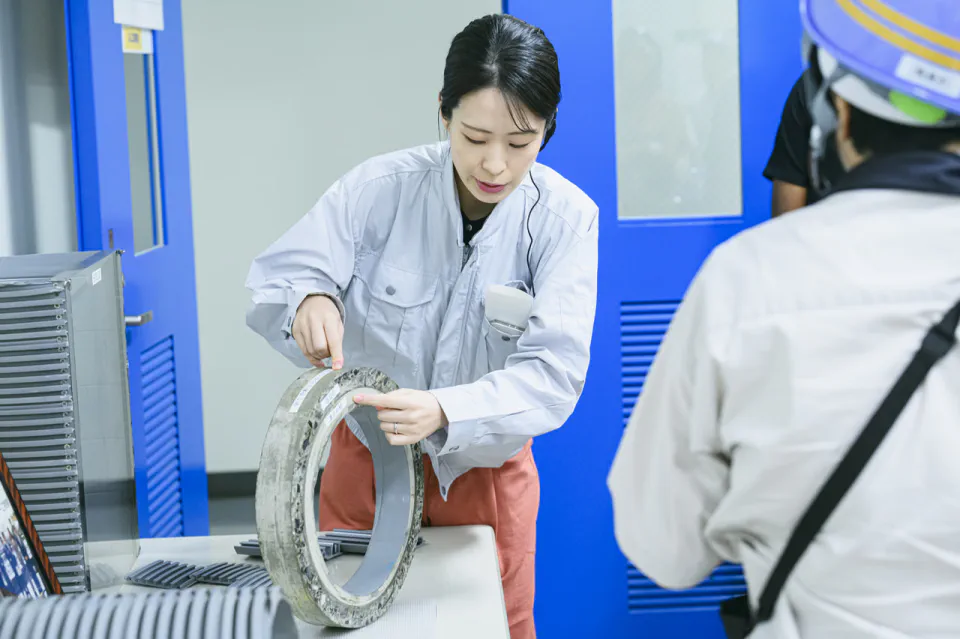
Participants learn about the SPR Method, which rehabilitates aging sewer pipes without excavating roads
From Learning About Safety to Experiencing It
Wearing helmets, participants entered the Manhole Replica, which recreates a manhole approximately four meters deep and the sewer pipe connected to it. After an explanation of how to detect hydrogen sulfide and other gases and how to wear a safety harness, they crouched down to make their way through the approximately 1.5-meter-diameter pipe. A participant from Manila said, “This is my first time. I think many of our decision-makers have never been inside one either.”
Approximately 80% of the sewerage system in Tokyo’s 23 wards is a combined sewer system, in which wastewater and stormwater are collected in the same pipes. During heavy rainfall, water can overflow the weirs and be discharged into rivers and the sea, potentially carrying floating debris with it. A water level control device uses just two walls—a guide wall and a surface control plate—to separate the paths taken by the water and debris. A vortex generated behind the surface control plate draws in the debris: water is discharged, while sewage containing the debris flows into a downstream sewer pipe leading to a Water Reclamation Center. Because the system operates solely on the energy of the water flow, without an external power source, it eliminates the need for filters and powered equipment previously required and also reduces maintenance requirements.
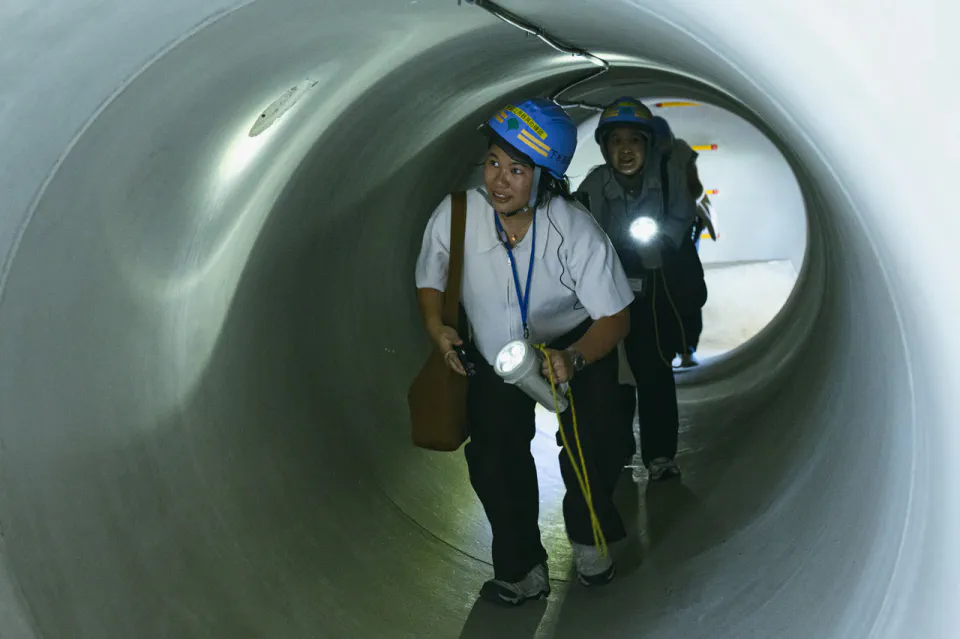
Wearing helmets, participants walk through a full-scale sewer pipe
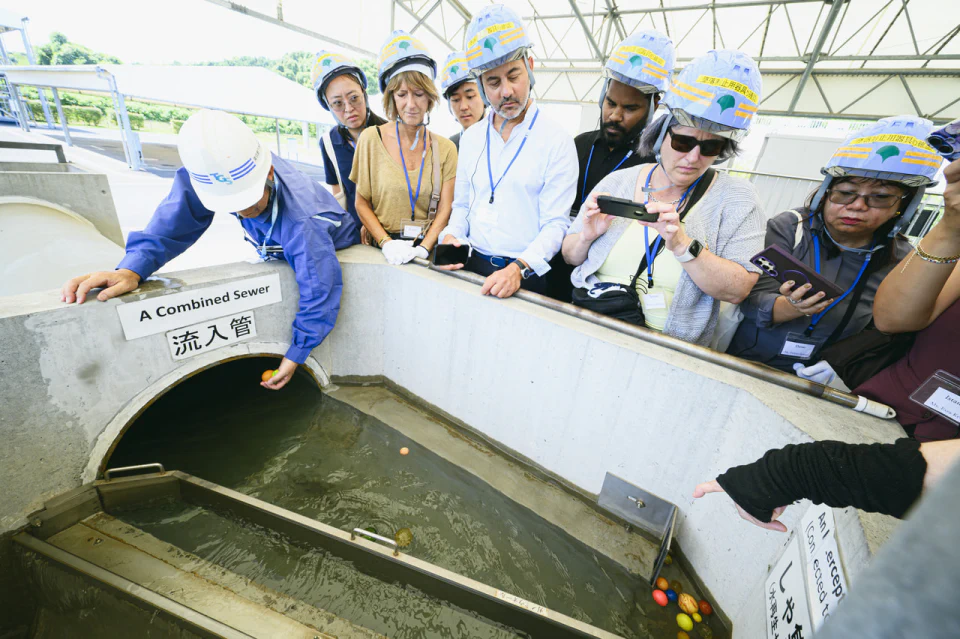
Balls representing debris enter the inflow pipe. Water is directed toward the discharge side, while the debris is directed toward the Water Reclamation Center
A highlight of the day was the Simulated Pipe Flow Walking exercise. In groups of five to seven, participants entered a pipe model filled with water to a depth of 40 centimeters and walked both with and against the current. Sections of the floor are made from concrete and PVC, allowing participants to feel the difference in slipperiness underfoot. As the flow velocity increases, walking against the current suddenly becomes much more difficult. In an emergency, therefore, workers should move downstream with the flow. The exercise is designed to instill this lesson through physical experience rather than simply through theoretical understanding.
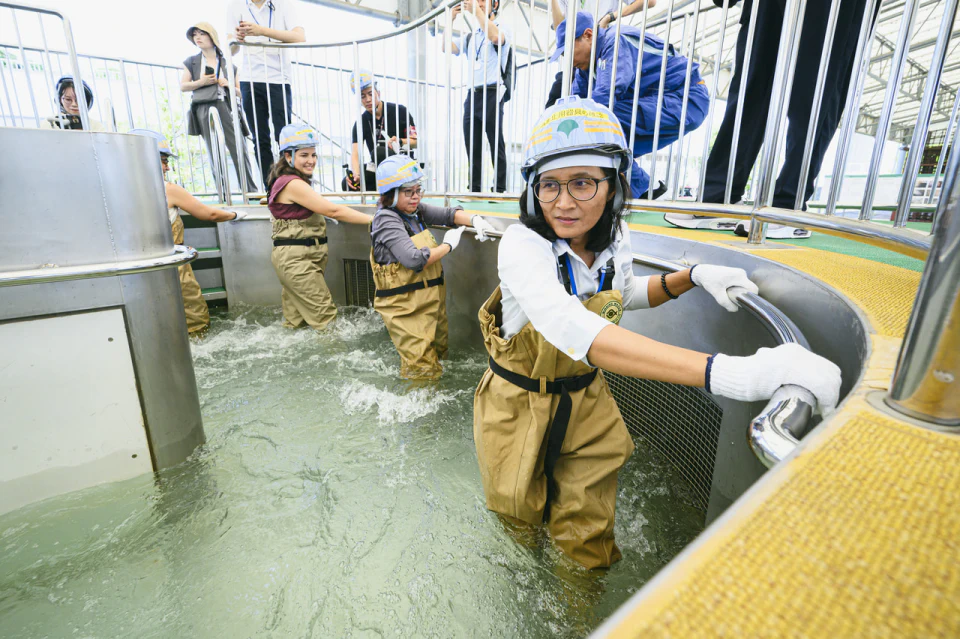
Participants walk single file through flowing water in the Simulated Pipe Flow Walking exercise
Participants also received an explanation of earthquake preparedness measures. If soil liquefaction causes a manhole to rise and protrude above ground level, it can obstruct the passage of emergency vehicles. With the Floatless Method used by TMG, when groundwater pressure reaches a certain level, a cover on the water inlet comes off, allowing the buoyant force to escape into the manhole and preventing it from rising. Installation is being prioritized along emergency transportation roads and other key routes. The system drew particular interest from a participant from Brussels. During the exchange of opinions, the participant suggested that the valve might also be useful for controlling rising groundwater levels during work to waterproof aging pipes.
At a facility replicating the central monitoring room of a pump station, participants also experienced how operators respond during heavy rainfall and power outages. They were particularly interested to learn that the exercise used data from heavy rain in Tokyo on August 22, just two days before the visit.
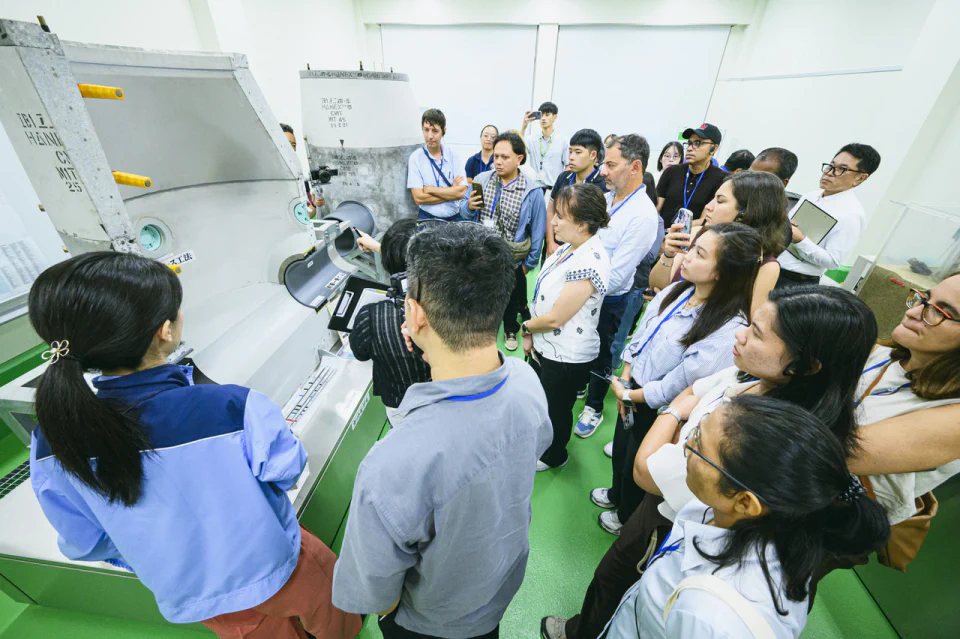
Participants examine a manhole model demonstrating how the Floatless Method prevents uplift
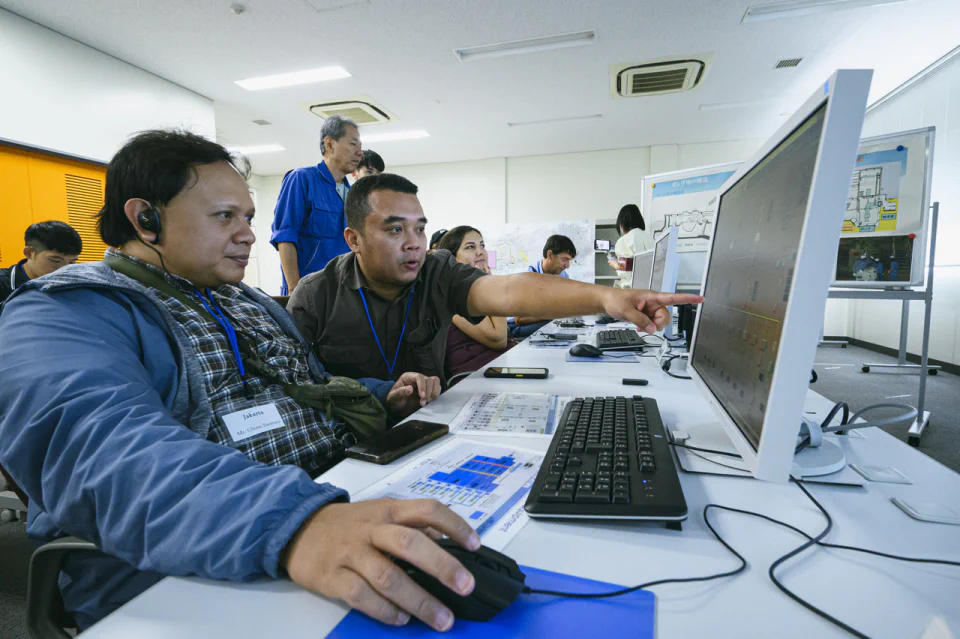
Participants experience responding to heavy rainfall at a facility replicating a pump station’s central monitoring room
② Tokyo’s Water Supply System Supporting the Lives of 13.85 Million People
Challenges Facing Cities in Water Supply
On the second day, participants visited waterworks facilities. One of the challenges discussed was non-revenue water. Internationally, the non-revenue water rate is defined as the percentage of water distributed from a water purification plants that does not generate revenue due to leakage or other factors. In Jakarta, this rate reached approximately 46% in 2024. Istanbul, meanwhile, reduced its rate from approximately 21% in 2020 to approximately 19% in 2024.
Another issue raised by several cities was public trust in tap water. Ensuring water quality is not enough; the challenge is also whether residents trust that the water is safe. A participant from Kulhudhuffushi explained, “People don’t trust that the water supplied by the utility is safe.”
A Low Leakage Rate Sustained by Training and Technical Development
In the morning, participants visited the Training and Technical Development Center of the TMG Bureau of Waterworks, a facility that integrates training and technical development and offers 181 types of training, including programs for administrative staff.
At the outdoor Structure Models of Trench Timbering, participants descended below ground level in single file. The facility, which simulates an excavation site, deliberately includes examples of improper construction for trainees to identify themselves.
In the Practical Area with Exposed Pipeline, participants watched a demonstration of leak repair. A staff member straddled a pipe and demonstrated how to plug a hole from which water was spraying.
In the exhibition room, participants viewed a model of an earthquake-resistant pipe joint designed to prevent pipes from becoming disconnected during an earthquake. The joint allows expansion and contraction of ±1% of the pipe length, helping prevent disconnection even when pipes move during an earthquake. Through the accumulation of this kind of training and the use of various technologies, Tokyo has maintained its leakage rate—the percentage of water distributed from the water purification plants that is lost through leaks before reaching household water meters—in the 3% range.
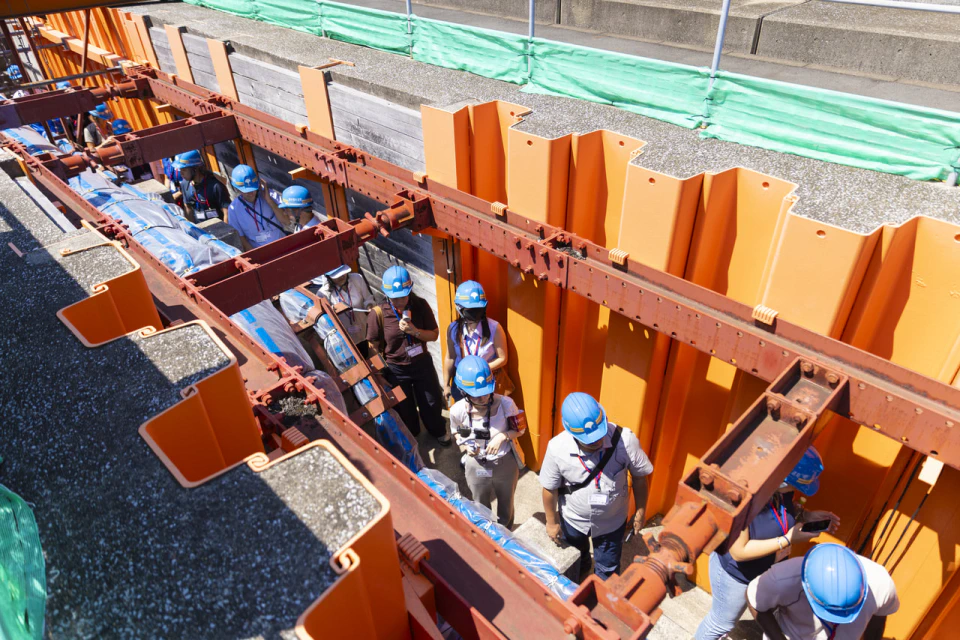
Participants walk through the Structure Models of Trench Timbering, looking for examples of improper construction
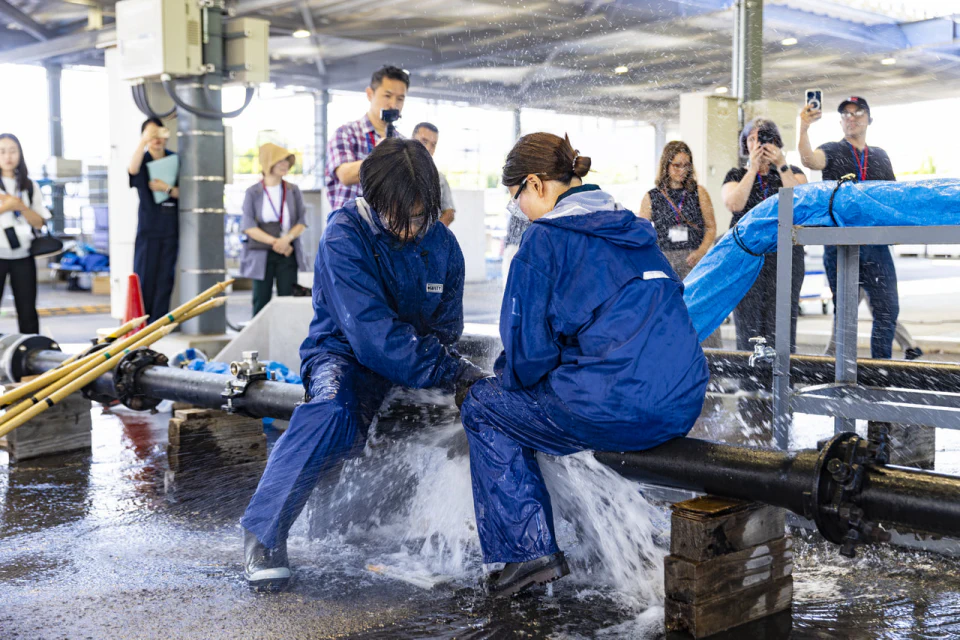
The necessary skills for leak repair are practiced above ground before working at actual underground sites
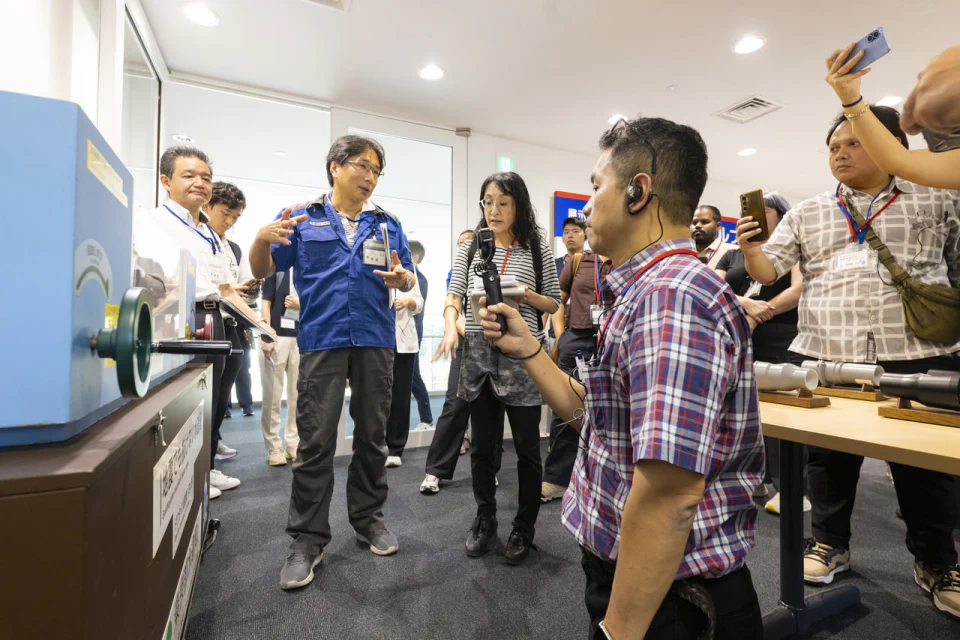
A Bureau of Waterworks staff member explains a model of an earthquake-resistant pipe joint
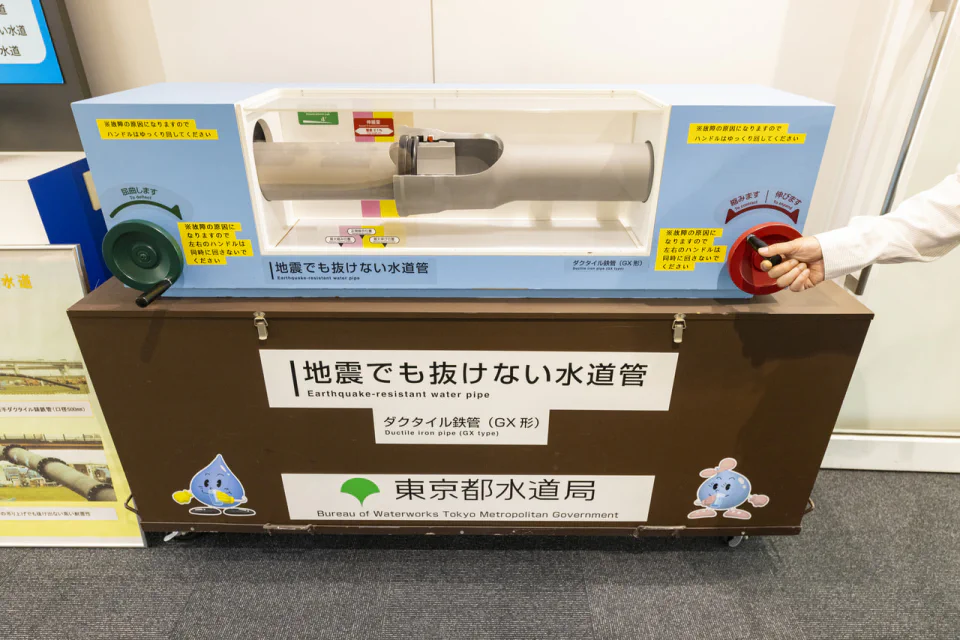
Turning the handle moves the joint vertically and horizontally, allowing participants to observe how it expands and contracts
Experiencing Simulated Accidents to Make Safety Personal
The final activity on the morning of August 25 was the VR Safety Experience Simulator. Two scenarios were demonstrated: electric shock and a fall from height. Participants who did not take part in the simulation themselves followed the experience from the participant’s point of view on a screen, and audible reactions could be heard around the room at the moments of electric shock and falling.
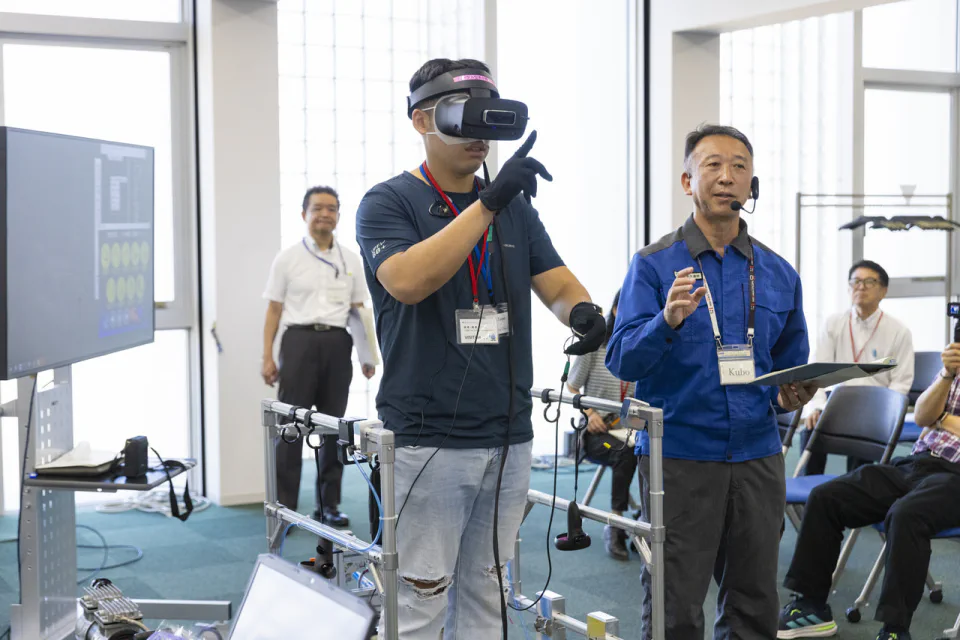
A participant uses the VR Safety Experience Simulator to experience a simulated workplace accident
The words “Safety First” appear on the simulator’s start screen. A staff member at the center explained that the phrase may have originated from the American expression “Safety first, Quality second, Production third,” of which only “Safety first” took root in Japan.
The experience continued to be discussed during the exchange of opinions held after the full program. A participant from New Taipei who experienced the electric-shock scenario said, “I really felt how precious life is. In Japanese, I want to say yokatta—‘thank God I’m still alive.’”
A participant from Bangkok related the exercise to a personal experience. While supervising construction work, one of the participant’s subordinates had fallen from a worksite into the water. “When people hear the same safety message over and over, they stop listening. So you have to change how you communicate it. I’m convinced that someone who experiences it for themselves will never forget it.”
A participant from Los Angeles was familiar with the slogan. “At the LA Water Department, our safety slogan is, ‘There is no job so important or so urgent that it cannot be done safely.’ So I think in that sense we share that common sentiment.” The participant added that a memorial stands in front of the department’s headquarters to workers who lost their lives due to occupational injuries.
Advanced Water Treatment for High-Quality Tap Water at the Misato Water Purification Plant
As of March 2025, the Bureau of Waterworks supplies approximately 13.85 million people with 4.18 million cubic meters of water per day. Misato Water Purification Plant, which participants visited that afternoon, is the fourth largest of Tokyo’s 10 water purification plants, with a treatment capacity of 1.1 million cubic meters per day. Advanced water treatment facilities were introduced in 1999 and 2013 to address musty odors associated with deteriorating water quality in the Tone River.
Participants were shown how ozone, generated by applying approximately 7,000 volts to dry air, breaks down odor-causing substances, while microorganisms in biological activated carbon remove organic matter and ammonia nitrogen.
During the Q&A session, many of the questions focused on water safety. One representative question came from a participant from Jakarta: “How does the government ensure that the water remains safe to drink until it reaches people’s homes?” A staff member at the water purification plant explained that the national government sets water quality standards, while the Bureau of Waterworks has established its own, even stricter targets. Automatic water quality monitors are also installed at 131 faucets across Tokyo to monitor water quality 24 hours a day, 365 days a year.
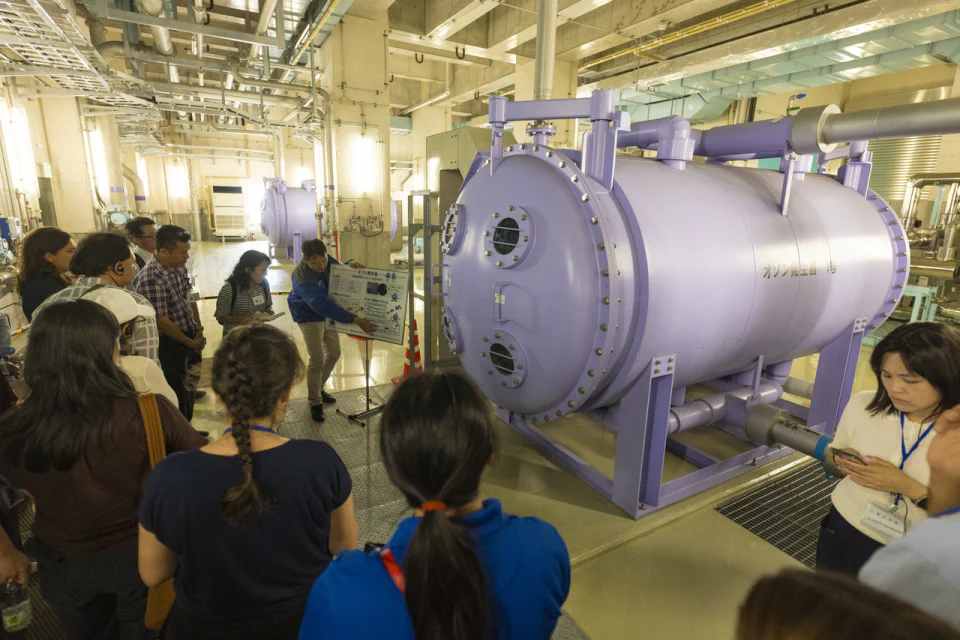
Participants observe light emitted inside an ozone generator
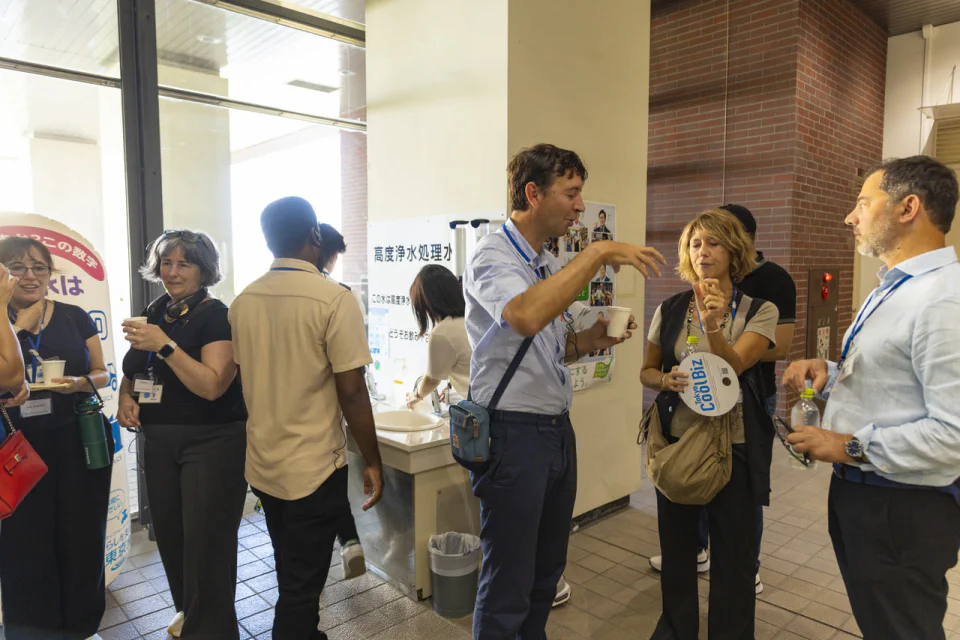
During the tour, participants taste Tokyo tap water treated using advanced water treatment processes
Cities Share Their Interests and Common Challenges
On both days, the site visits were followed by an exchange of opinions in which all 18 participants had an opportunity to speak. Although the participants were the same, their areas of interest shifted markedly depending on the subject.
On the first day, which focused on sewerage, participants from several cities noted that they did not have comparable training facilities. Participants from Istanbul and New Taipei both mentioned the lack of equivalent facilities, while a participant from Paris explained, “We have a very small training center. We have samples of each type of equipment, and it’s mainly for safety training.” Participants were interested not only in the facilities themselves, but also in the approach to human resource development that enables staff to put theory into practice in a safe environment.
On the second day, which focused on water supply, the discussion shifted to water safety and building public trust in the safety of tap water. A participant from Bangkok said, “One of the challenges in my city is making people believe that the water we produce is good enough to drink. Right now, many residents have to buy bottled water because we don’t dare to drink tap water.”
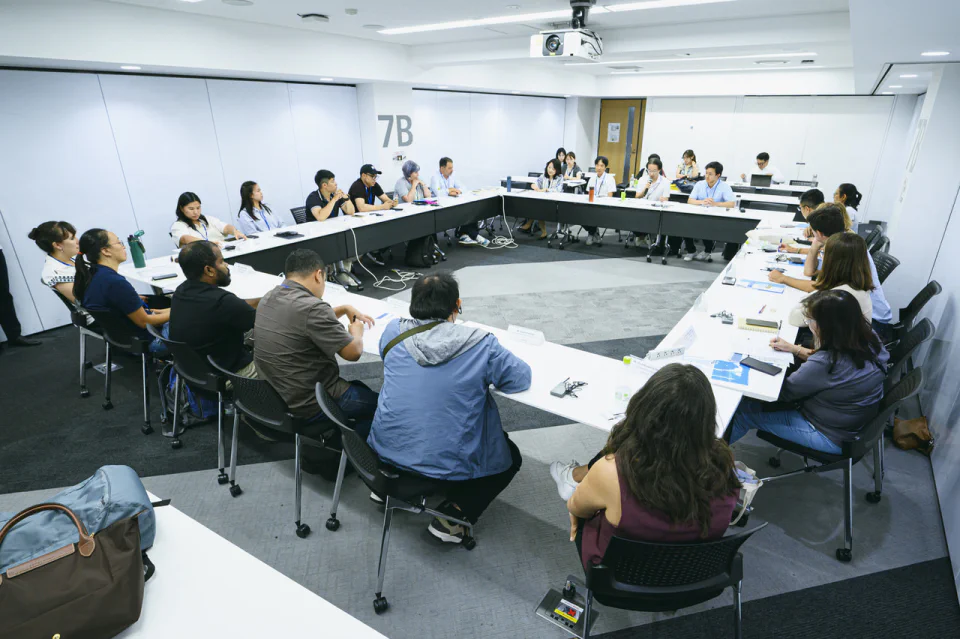
Day 1: Exchange of opinions
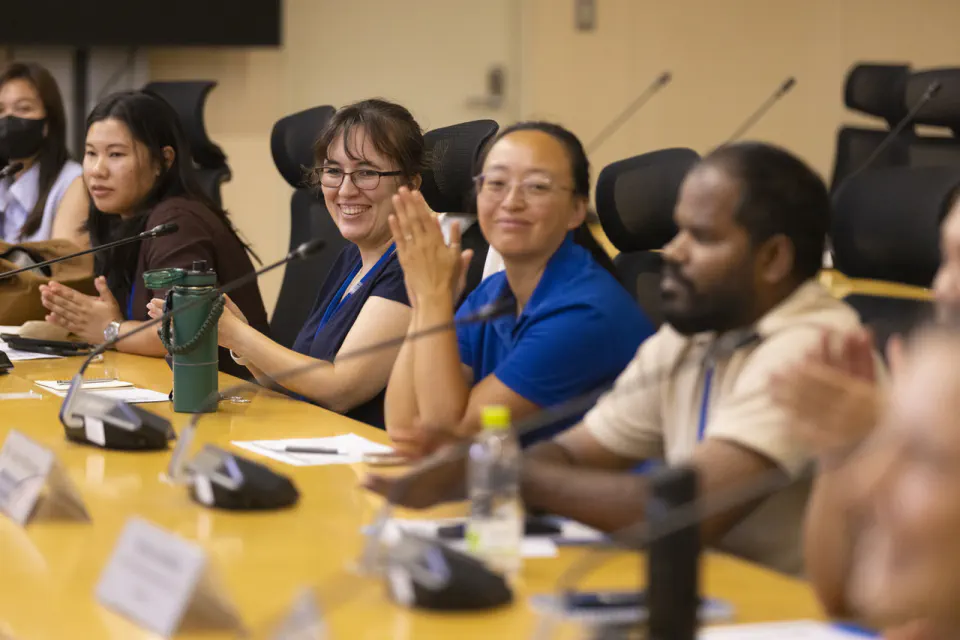
Day 2: Exchange of opinions at the Tokyo Metropolitan Government Building
From Learning in Tokyo to Further Collaboration: Expanding Intercity Exchange
G-NETS is a network established by TMG to enable cities facing common challenges to share knowledge and seek solutions together. The dialogue during this study tour will not end here. During discussions on energy recovery from sewerage, Brussels offered to share relevant materials, while Los Angeles offered to connect participants with the engineer responsible.
Many of the challenges the cities face are shared, albeit to varying degrees. A participant from Toronto summed this up succinctly: “While I live halfway around the world, all of our challenges are quite similar, and so in reality, we’re like a big family trying to come up with solutions to all of these challenges.” A TMG official concluded by noting that although circumstances differ from city to city, many of their goals are shared, making cooperation among cities more important than ever.
Rather than being a one-way tour of facilities, the study tour provided opportunities to share practical experiences and exchange views on the challenges facing each city. Connecting officials from different cities and creating opportunities for further knowledge sharing is another form of intercity collaboration that G-NETS aims to foste
Participating Cities
Bangkok, Brussels, Catalunya, Davao, Istanbul, Jakarta, Kulhudhuffushi, Los Angeles, Manila, New Taipei, Nouakchott, Paris, Toronto (Alphabetical order)
Related Links