
November 20, 2026
Sharing Disaster Lessons Across Cities: Tokyo and Manila Build Disaster Preparedness through G-NETS
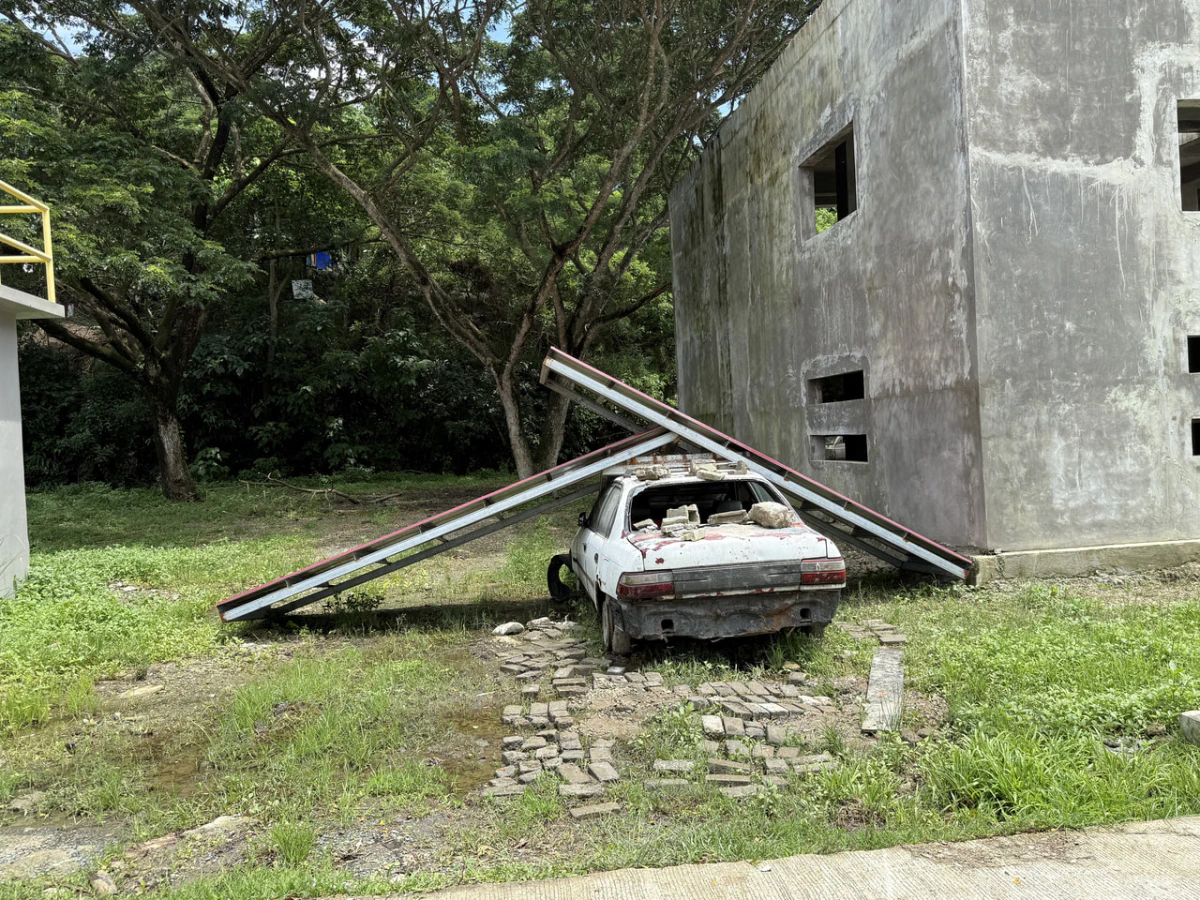
The MMDA Carmona, Cavite Disaster Preparedness Training Center (DPTC) features facilities that simulate a variety of disaster scenarios, allowing for practical search-and-rescue training
From August 18 to 20, 2026, Tokyo Metropolitan Government (TMG) officials, including members of the Tokyo Fire Department, conducted a three-day site visit focused on disaster preparedness and firefighting in Metro Manila, the Philippines. The visit formed part of the G-NETS Working Group Technical Exchange Program. Through both inbound visits, in which officials from overseas cities visit Tokyo, and outbound visits, in which TMG officials travel to other cities, G-NETS facilitates the sharing of experiences and lessons learned while exploring new solutions to urban challenges.
One of the key factors behind the visit was a major fire that broke out at the Navotas City Sanitary Landfill in April 2026. In response, TMG has been advancing technical cooperation with Manila, with a total of four fire-service technical exchanges planned for the current fiscal year. This visit, one of those exchanges, helped lay the groundwork for planned practical firefighting training.
Learning from Manila’s Crisis Management System
During the three-day visit, the delegation toured several sites, including the scene of the fire in Navotas City, the Metropolitan Manila Development Authority (MMDA), and Ninoy Aquino International Airport. TMG officials also shared their experiences responding to the January 2024 aircraft collision at Haneda Airport, allowing both cities to exchange the lessons they have learnt.
The MMDA Communication and Control Center, visited on the first day, offered insights into how a city can protect itself as a whole and respond when disasters strike. The center operates around the clock, monitoring not only traffic accidents and congestion but also disasters such as floods and earthquakes. Using approximately 500 surveillance cameras, it shares traffic and disaster information in real time with 17 local government units. While AI is used to analyze traffic flow, incidents are identified through human visual monitoring rather than automatic AI detection. This provides an example of how AI-based analysis and human judgment can be used for different purposes.
Notably, the facility serves a purpose beyond that of a monitoring center. During a major disaster, it functions as an emergency response hub where relevant agencies gather to make decisions. It can also serve as an alternative headquarters if the national disaster response headquarters is incapacitated. Preparing a backup facility in case the main command center becomes inoperable reflects a fundamental principle of urban disaster preparedness: business continuity planning (BCP).
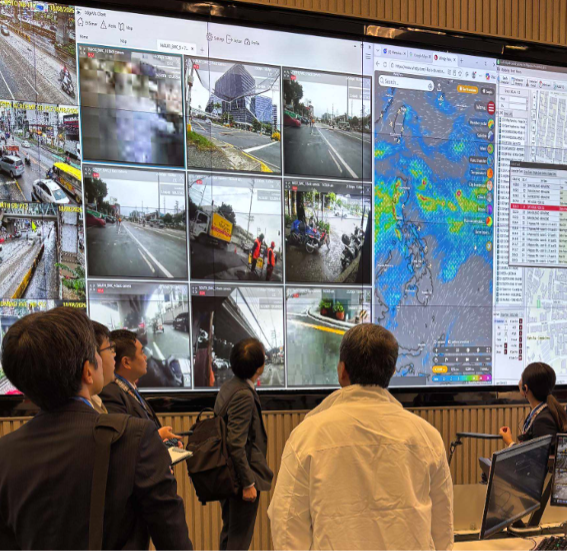
The Communication and Control Center operated by MMDA
Building Airport Safety through Continuous Training
At Ninoy Aquino International Airport, the delegation observed practical firefighting training simulating an aircraft fire. To prepare for a wide range of risks, the airport has established response procedures for 16 types of emergencies, including aircraft accidents and bomb threats, and conducts regular training exercises. The delegation also watched a large-scale firefighting demonstration using an aircraft replica. Such exercises, which recreate fire conditions and involve coordination among multiple agencies such as fire services, medical institutions, and airport operators, can offer valuable lessons for other cities.
Tokyo, in turn, presented its response to the aircraft collision at Haneda Airport in January 2024. Officials explained how firefighters combined multiple methods and worked with the airport firefighting team to extinguish the burning aircraft. Sharing these experiences can contribute to further improvements in airport disaster preparedness. Both cities recognized that regular joint exercises and simulations of emergency situations are essential to preparing for large-scale disasters.
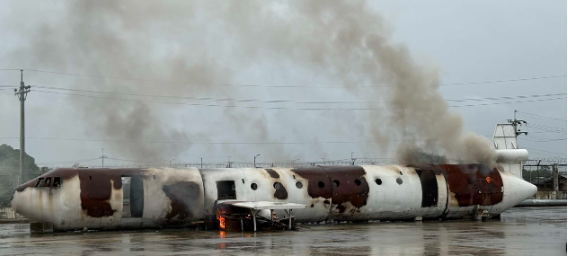
The delegation observes a firefighting demonstration in which an aircraft replica is set alight using diesel fuel and wood before being extinguished
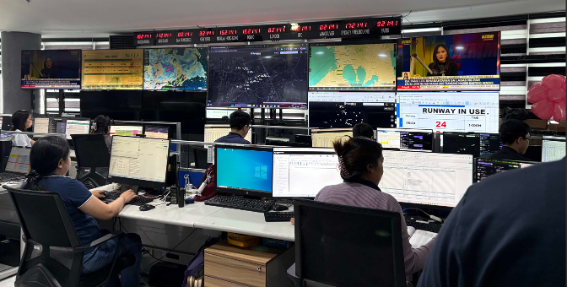
The Arrival Monitoring and Planning Center at Ninoy Aquino International Airport
The Challenges Revealed by the Landfill Fire
On the second day, the delegation visited the Navotas City Sanitary Landfill, where a major fire had broken out. The site is located on reclaimed land in Manila Bay, making access and the transport of equipment and materials difficult. Restrictions on nighttime operations further complicated the response. As a result, the fire continued for 31 days. Government authorities, fire services, and private companies worked together to construct access roads and deploy 88 pieces of heavy equipment to bring in large quantities of soil. By covering the burning areas with soil to cut off the oxygen supply, they were eventually able to extinguish the fire.
The visit highlighted a key challenge: responding to a landfill fire involves much more than simply putting out the flames. Using large volumes of water can generate leachate, potentially affecting the surrounding environment. A comprehensive response must therefore take environmental considerations and coordination with neighboring local governments into account. Monitoring to prevent another fire is still ongoing at the site, with weekly drone surveys reportedly conducted to check surface conditions and identify any abnormalities.
TMG officials shared examples of responses to fires at industrial waste treatment facilities, as well as initiatives addressing lithium-ion battery fires. Representatives from Manila asked specific questions, including about ammonia treatment, demonstrating a strong interest in Japan’s expertise.
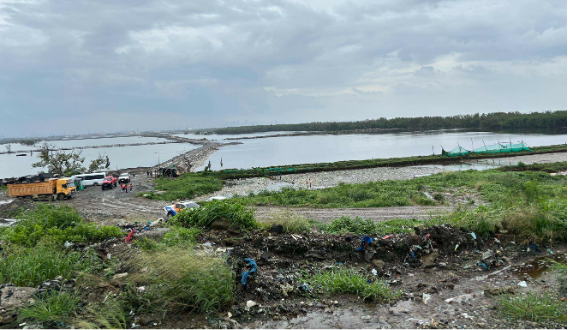
Navotas City Sanitary Landfill
Building Relationships with Private Companies to Strengthen Emergency Response
The Bureau of Fire Protection (BFP) of the Philippines provided an overview of its firefighting and emergency response system and its cooperation with the Manila Electric Company (MERALCO). In a major disaster, fire services cannot respond alone, and cooperation with private companies is essential to restoring electricity and other infrastructure. BFP and MERALCO have signed a memorandum of agreement and have worked together on 360 disaster response operations to date.
TMG officials presented an example of cooperation with a private company following the collapse of a building’s exterior wall at a demolition site in June 2022. To rescue a worker trapped beneath a 20-ton section of wall, the Tokyo Fire Department dispatched 22 units and used a 150-ton crane provided by a private company. The Field Live Video (FLV) system enabled rescue personnel working at height, ambulance crews on the ground, and doctors to share information in real time, establishing a coordinated response that allowed the rescue operation and subsequent transport to a medical facility to proceed swiftly.
During the Q&A session, BFP representatives asked numerous questions about cooperation with private companies and the Tokyo Fire Department’s deployment system, providing an opportunity to convey the department’s commitment to making the rescue of human lives its highest priority.
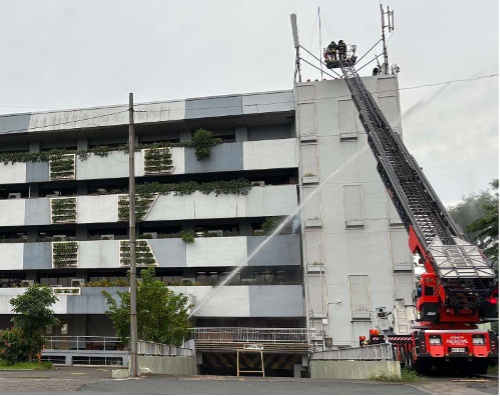
Rescue training observed at the BFP MERALCO Fire Station
Local Communities on the Front Lines of Disaster Preparedness
On the third day, the delegation visited Barangay San Antonio to learn about community-led disaster preparedness activities. A barangay is the smallest administrative unit in the Philippines. In this community, residents are regarded not simply as recipients of disaster preparedness measures, but as active participants responsible for protecting their own neighborhoods. More than 200 disaster preparedness drills are conducted each year, with students and volunteers also taking an active part. These activities are driven by residents’ attachment to their community and their desire to contribute to it.
This approach, in which individual residents play an active role in protecting their communities, has much in common with the principles of “self-help, mutual help, and public help” promoted by TMG. The visit prompted lively exchanges of views on Japan’s volunteer fire corps system and community disaster preparedness drills.
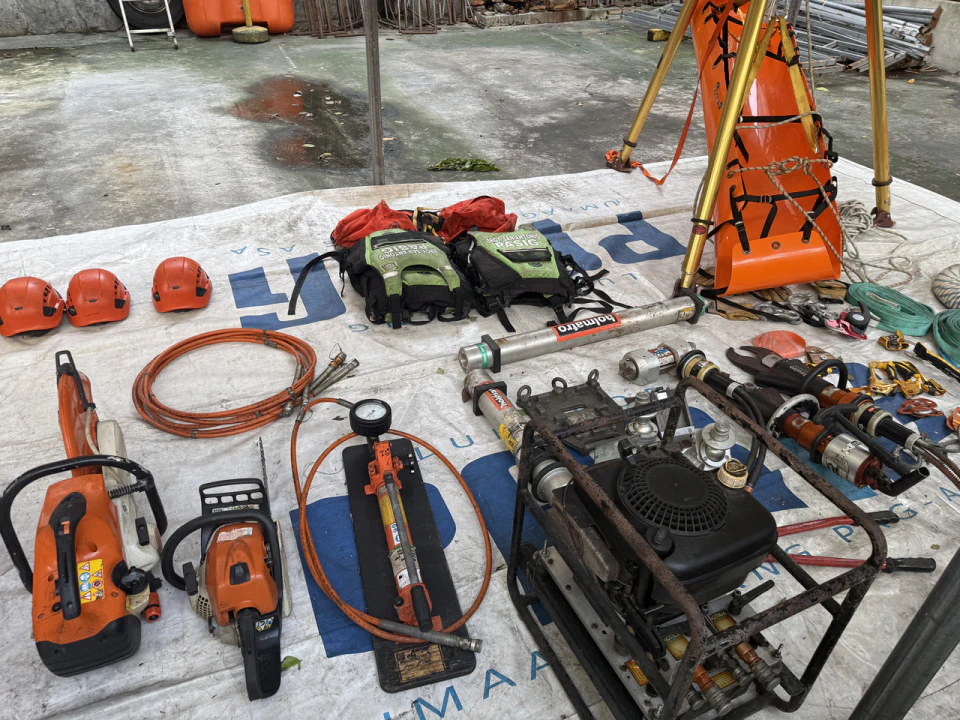
The Barangay San Antonio Disaster Risk Reduction and Management Office (DRRMO) is equipped with rescue equipment regarded as internationally standard
Building Future Preparedness Together Through City-to-City Exchange
The three-day visit to Manila reaffirmed the value of city-to-city exchanges in which officials learn directly from one another’s experiences and practices on the ground, using those insights to strengthen disaster preparedness. From urban monitoring systems and cooperation with private companies to community-led disaster preparedness activities, the visit offered TMG officials an opportunity to reflect on Tokyo’s own approaches.
As the challenges facing cities become increasingly complex, no single city can devise every solution on its own. By sharing the knowledge and lessons gained through disaster response and adapting them to their respective circumstances, cities can work together to strengthen their preparedness for the future.
Related Links