
July 29, 2026
With Creativity, Cities Are Rejuvenating Their Urban Spaces
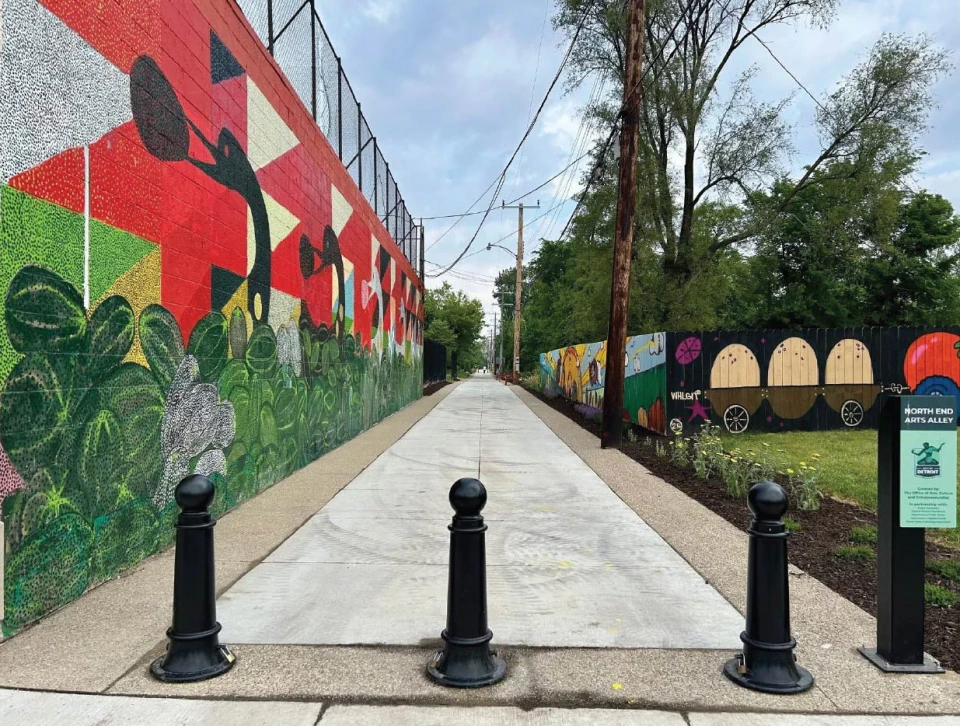
Detroit’s North End Agri-Arts Alley, adorned with vibrant murals. Photo: courtesy of the City of Detroit
Sustainability not only means living and working in a way that protects the environment for future generations—it means enhancing the current environment for improved well-being.
In April 2026, attendees at the 3rd Global Network for Sustainability (G-NETS) Leaders Summit, a forum designed to share solutions to common urban issues, took up the challenge of urban resilience and well-being, discussing it alongside new technology solutions at SusHi Tech Tokyo 2026, Asia’s largest global innovation conference.
Detroit Case Study: From Blight to Beauty
For decades, urban blight was a defining challenge facing Detroit. Abandoned buildings, vacant lots, and neglected alleyways became symbols of the city’s population decline and economic struggles following the closure of manufacturing plants. In recent years, however, Detroit has increasingly turned to arts, culture, and community-driven design as tools to revitalize neighborhoods and restore civic pride.
Founded in 1701 as a French trading post, Detroit grew rapidly in the early 20th century into one of the world’s leading manufacturing centers, earning the nickname “Motor City” through the rise of automobile giants such as Ford Motor Company, General Motors, and Chrysler. Henry Ford’s assembly-line innovations transformed industrial production and attracted hundreds of thousands of workers from across the United States, including many African Americans migrating from the South during the Great Migration.
Detroit also became a global cultural powerhouse through music and the arts. In 1959, Motown Records was founded in Detroit by Berry Gordy Jr., unleashing the “Motown sound” that helped shape modern popular music and break racial barriers in the American entertainment industry. Stevie Wonder, Marvin Gaye, Diana Ross, and The Supremes were among the legendary performers associated with the label. Beyond Motown, Detroit has produced influential artists across many genres, including Aretha Franklin, Eminem, Alice Coltrane, and techno pioneers such as Juan Atkins.

Supporting creativity enhances well-being, says Lacey Holmes, Project Manager for Arts Initiatives for the City of Detroit
“Wherever you go in the world, where there is art, you usually find a Detroit connection,” Lacey Holmes, Project Manager for Arts Initiatives for the City of Detroit, told attendees at the G-NETS session on promoting culture, sports and entertainment. “Creativity has always been in our neighborhoods, in our streets, and in our homes. Supporting creativity isn’t just good policy. It’s a way to build culture and well-being.”
Detroit’s powerful creative legacy has been key to its rejuvenation and Holmes’s Office of Arts, Culture and Entrepreneurship (ACE) is leading the change. One of the city’s most visible efforts is the Arts Alleys initiative, part of former Mayor Mike Duggan’s broader “Blight to Beauty” campaign. By mustering community members on a grassroots level, the initiative has involved everything from landscaping and removal of dead trees to mural painting and renewal of public spaces.
The program has transformed nine neglected back alleys into landscaped public gathering spaces featuring murals, sculptures, lighting, gardens, and performance areas created by local artists and residents. Supported by millions of dollars in federal American Rescue Plan funding, the initiative paid 45 artists to create murals and aims to convert spaces once associated with dumping and decay into community assets. Holmes herself has documented nearly 900 murals in the city. One result of this is that USA Today ranked Detroit the sixth-best city in the U.S. for street art.
In many cases, infrastructure improvements accompany the artistic elements. Cracked pavement is replaced, drainage systems upgraded, and new greenery planted alongside public art installations. The Passage to Wellbeing Alley, for instance, includes a butterfly garden, a wheelchair garden and a creative empowerment garden equipped with emergency power plug-ins for community members.
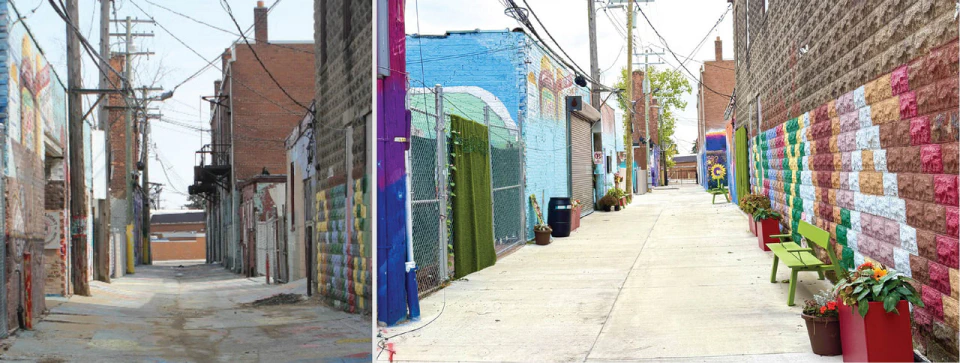
Before and after views of cleanup efforts in an alley in Detroit’s Old Redford neighborhood. Photo: courtesy of the City of Detroit
Another example is the Agri Art Alley in Detroit’s North End, where artists collaborated with the Oakland Avenue Urban Farm to blend agriculture, environmental sustainability, and public art. The alley incorporates gardens, gathering areas and colorful installations designed to reconnect residents with neglected public spaces. Detroit has also expanded its City Walls mural program, which has funded artists to create murals on buildings throughout the city. The initiative has beautified more than 125 locations while supporting Detroit’s creative economy and giving neighborhoods artwork that reflects local history and identity.
Art as Infrastructure for Citizens to Gather Again
In Michigan, every dollar invested into creativity returns another $5 in economic activity, Holmes noted. As part of broader support for the arts and culture, Detroit has appointed a composer laureate, poet laureate, and official historian.
“We don’t just rebuild, we reimagine,” Holmes told the conference. “We have turned vacant spaces into places of expression, invested in public art, and given people a reason to gather again. Our city is growing. What we have learned from this is creativity doesn’t just decorate the city—it helps to heal it… Arts aren’t extra. They are infrastructure.”
Community participation is central to many of these projects. Residents often help select artists and shape designs, ensuring the spaces reflect neighborhood culture rather than top-down redevelopment. Supporters say this helps strengthen community ownership and encourages residents to reclaim public spaces that had long been neglected.
Cultural Policies from Cities Shared at G-NETS
Other participants at the G-NETS conference panel shared similar views. Georg Klußmann, chief of protocol for the state of Berlin, pointed to all the museums, festivals and cultural and sports events happening in his city, and noted that they contribute to the city’s DNA and the well-being of Berliners. Mohamed Athif, Mayor of Kulhudhuffushi City, the Maldives, emphasized the importance of culture and sports infrastructure in a small island city of 13,000. Pedro Duarte, Mayor of Porto, Portugal, discussed how community life must be supported by the three pillars of culture, public spaces and mobility, while Melissa Inooka, Trade and Investment Commissioner (Japan) for Queensland, discussed the importance of the upcoming Brisbane 2032 Olympic and Paralympic Games in showcasing 14 cities and regions in the area to the world.
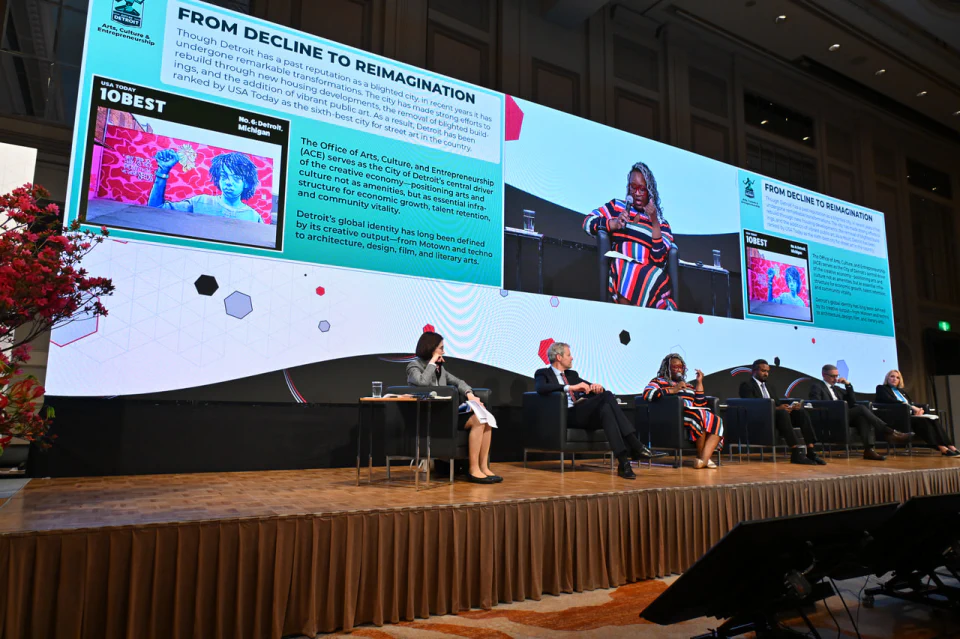
Holmes speaking on “Promoting Culture, Sports, and Entertainment,” one of the session topics under the Well-Being category at the 3rd G-NETS Leaders Summit
While art alone cannot solve Detroit’s broader economic and housing challenges, city leaders and local organizations increasingly see creative placemaking as an important part of urban recovery. By combining infrastructure improvements with public art and community engagement, Detroit is attempting to turn spaces once defined by blight into symbols of resilience and renewal, and the message resonated among the participants at G-NETS in Tokyo.
“Because of the current global political climate, G-NETS has been very inspiring to me,” said Holmes. “Even though we come from different cities and nations, we’re all facing the same challenges. The common thread has been to really pay attention to citizens and to improve their quality of life overall. It’s been inspiring to see that everyone is putting people first.”